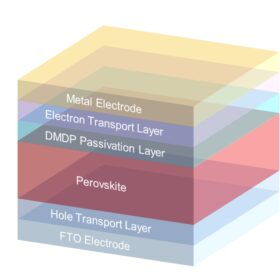
Inverted perovskite solar cell achieves 25.1% efficiency via new passivation technique
A group of scientists in the United States has utilized a new passivation strategy based on sulfur-modified methylthio molecules to build an inverted perovskite solar cell with a certified efficiency of 25.1% and remarkable stability. The proposed passivation approach reportedly led to a five-fold increase in carrier lifetime and a three-fold reduction in photoluminescence quantum yield losses.
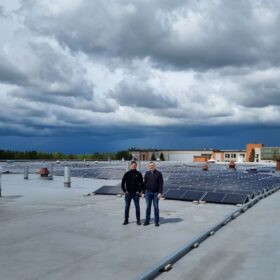
Inion Software unveils PV plant short-term performance forecasting, diagnostic platform
Inion Software, a Lithuanian PV power plant equipment specialist, has unveiled a platform that combines model-based performance forecasting with plant monitoring functionality. It offers insights based not only on production data, but also weather data, along with site parameters and PV capacity information.

Self-financed solar array destroyed in Lebanese farming village
One of the project architects behind a solar power system in a southern Lebanese village tells pv magazine that the 200-panel array – which pumped water from an underground well for roughly 400 families – was allegedly destroyed earlier this month by Israeli forces. The community needs help rebuilding it, he says.
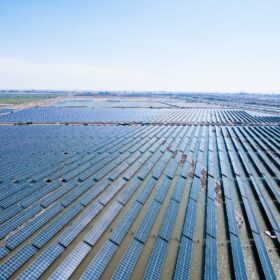
Chinese PV Industry Brief: January-October PV installations hit 142.5 GW
China’s National Energy Administration (NEA) says the nation installed 142.5 GW of solar in the first 10 months of this year, bringing it to nearly 540 GW of cumulative installed PV capacity by the end of October.
PERC inventor discusses the future of the technology
University of New South Wales academic Aihua Wang is the first female recipient of the United Kingdom’s Queen Elizabeth Prize (QEPrize) for Engineering, after sharing the 2023 award with Andrew Blakers, Martin Green, and her husband Jianhua Zhao for their work developing the passivated emitter rear contact (PERC) solar cell. pv magazine caught up with her to ask about the achievement.

European warehouses to stock 65 GW of excess modules by 2023-end
Research firm EUPD Research says that the European Union’s (EU) solar PV module excess inventory reached 47.2 GW in 2022 and may hit 40 GW in 2023. In a new report provided to pv magazine, the company forecasts the EU may install 60 GW of new PV capacity this year with Chinese solar module imports hitting about 100 GW.
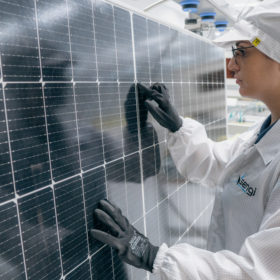
With China PV modules reaching record low prices, is there a chance for local PV manufacturing elsewhere?
From the International Solar Energy Society’s perspective, and the vision of a world with 100% renewable energy for everyone used wisely and efficiently, PV module production should not become an oligopoly and should not be concentrated in one corner of the world.
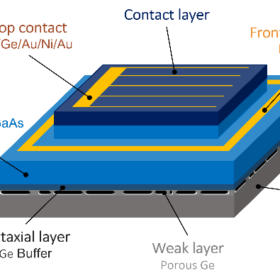
Gallium arsenide solar cell achieves 23.1% efficiency via electrochemical porosification
An international research group has utilized a new porosification technique to build gallium arsenide (GaAs) solar cells that allow the recovery of germanium films. The new cell achieved an efficiency that is reportedly in line with that of other GaAs PV devices, but can be produced at a lower cost thanks to the reuse of germanium.
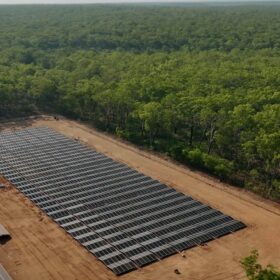
Construction begins on 1.2 MW modular PV plant in Australia
Modular PV array manufacturer 5B is deploying its preassembled, relocatable modular solar tech in a solar and battery energy storage project on Bathurst Island, Australia.

U.S. gov releases guidance for clean energy Investment Tax Credit
Section 48 guidance has been released, updating the requirements for the ITC under the Inflation Reduction Act.
