
US government set to pause new solar tariffs for two years
The White House is expected to announce a 24-month tariff exemption on solar modules manufactured in Cambodia, Malaysia, Thailand and Vietnam, while also invoking the Defense Production Act as a means to accelerate American manufacturing.
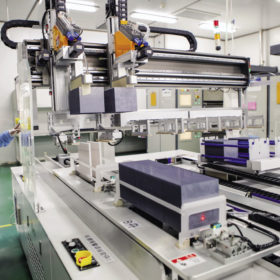
Chinese PV Industry Brief: LDK to invest in 600 MW HJT solar cell factory as price of polysilicon soars
A Chinese metals industry group said the price of polysilicon is rising, just as Comtec Solar revealed that it is gearing up to sell off its shuttered wafer factories in Shanghai. Flat Glass, meanwhile, has announced plans to expand solar glass production capacity.
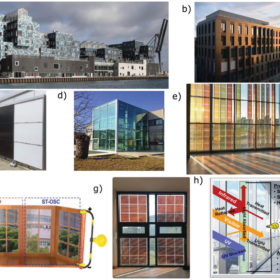
Tunable solar cells with customized design capabilities
German scientists have reviewed all solar cell technologies with tuning capabilities and have identified all of their possible applications.
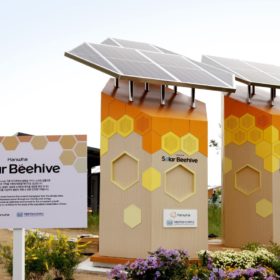
Solar beehive in South Korea
Hanwha Group has marked World Bee Day by unveiling the country’s first solar beehive. The PV modules on the beehive generate electricity to automatically monitor and control internal conditions.
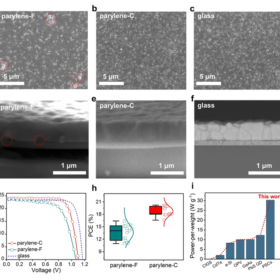
Ultra-thin inverted perovskite solar cell with 20.2% efficiency
Chinese scientists have developed an ultralight solar cell with perovskite film based on a 3-µm-thick polymer. It purportedly has a power conversion efficiency in line with that of perovskite cells of conventional thickness.
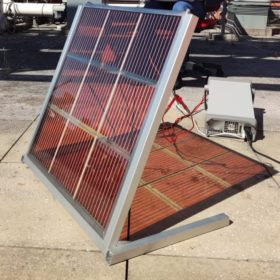
Semitransparent dye-sensitized solar module for BIPV applications
Scientists in Italy have developed a module with an area of 0.2 sm and an efficiency of 2.7% in outdoor conditions, with a tilt angle of 60 C. They designed it by considering the trade-off between low losses and device sturdiness.
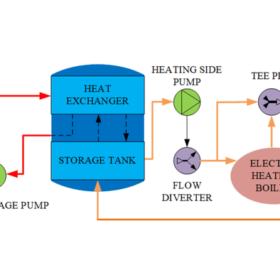
PVT-biomass system for space heating in small homes
A US-Chinese research group has developed a hybrid system proposal based on photovoltaic-thermal (PVT) modules, a heat pump, a backup electric boiler, and biomass generating units. They say it could be used as space heating in a single-floor home.
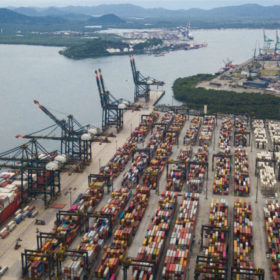
Brazil imported 5.2 GW of solar modules in Q1
High-power solar panels with outputs above 500 W accounted for more than 60% of all PV module imports to Brazil by volume in the January-March period.

REC Silicon to restart poly production at Moses Lake in 2023
REC Silicon says a cash injection from South Korea’s Hanwha will help it to resume fluidized bed reactor production at the Moses Lake polysilicon plant in the US state of Washington.
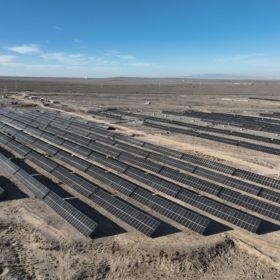
Chinese PV Industry Brief: China’s NEA predicts 108 GW of solar in 2022
The Chinese government says the nation is on track to install 108 GW of PV this year. Huaneng says it will build a new 10 GW module factory, while Akcome has revealed plans to increase its heterojunction panel capacity by 6 GW.
