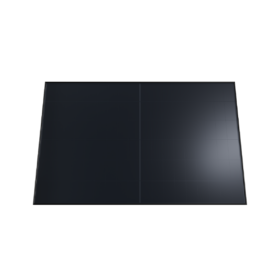
Winaico enters back-contact segment with 480 W solar module
The Taiwanese manufacturer has announced its WST-480BDX54-B2 Ultra Black Glass-Glass for the European market. It features an efficiency of 23.5%.
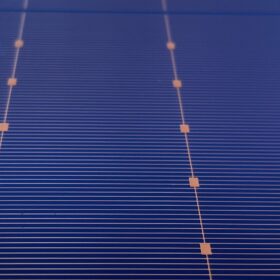
Key PV innovations often originated outside solar sector
Research from the Massachusetts Institute of Technology highlights 81 unique innovations across a diverse range of research efforts and industries that have impacted PV system costs since 1970, the majority of which originate from outside the sector.

Solar cell, wafer exports from China rise as panel exports fall
Ember Energy says China’s solar export market is shifting as more diverse global supply chains drive higher cell and wafer shipments, lifting combined solar product capacity 11% this year despite lower panel exports.

Indoor perovskite solar cell built with triple passivation strategy achieves 37.6% efficiency
An international research team has constructed an indoor perovksite PV device by using a triple passivation treatment to reduce crystal defects in the perovskite film. The cell achieved remarkable efficiency and was also able to retain 92% of its initial performance after 3,200 h.

New research shows cast mono wafers are still far from commercial maturity
A Chinese research team has investigated impurity and defect levels in solar cells based on mono cast wafers and have found that around 30% of the devices present an “excessive” reduction in power conversion efficiency. The scientists concluded that cast monocrystalline silicon will unlikely capture a meaningful market share in the near future.
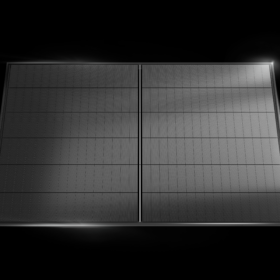
JinkoSolar presents 475 W TOPCon dual-glass solar panel with 23.77% efficiency
The Chinese manufacturer said its new IEC 61215-certified rooftop PV module relies on a 30 mm aluminum frame and dual-glass construction that reportedly help it withstand extreme snow loads and wind pressure.

Abandoned US nuclear site to host 16,000 MT polysilicon plant
Highland Materials will build a 16,000 metric ton (MT) solar-grade polysilicon plant on a former US nuclear project site, under a long-term lease with Pivotal Manufacturing.
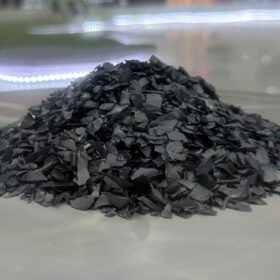
IFC loans $250 million for Oman polysilicon project
The investment package features a $200 million loan for the implementation of the project and a $50 million preferred equity investment. The approval is said to have been opposed by several members of IFC’s board of executive directors.
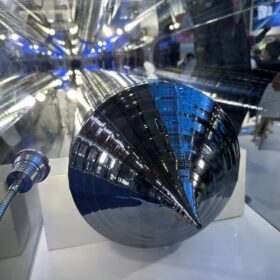
Is China’s $7 billion plan to reduce polysilicon overcapacity feasible?
OPIS, Wood Mackenzie, and Bernreuter Research have spoken with pv magazine about China’s alleged $7 billion plan to reduce polysilicon oversupply and restore a sustainable pricing environment for the PV supply chain, but opinions remain divided on its feasibility and effectiveness.
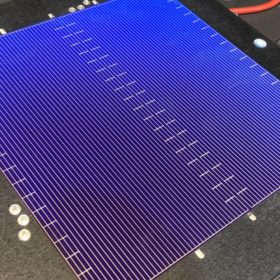
New research warns of unexpected UV-induced degradation in TOPCon solar cells from invisible light
Researchers from UNSW have found that invisible light accelerates UV-induced degradation in TOPCon solar cells, producing the same degradation effects as visible light but at a much faster rate. This can lead to significant open-circuit voltage losses and reduce cell efficiency.
