
Quantum adjustments for 23.9%-efficient inverted perovskite solar cell
Scientists in Canada fabricated a perovskite solar cell based on an inverted structure that achieved 23.9% efficiency, and maintained 92% of its initial performance after 500 hours of accelerated aging tests. By carefully controlling the thickness of the perovskite layer, the group was also able to gain control of “quantum mechanics” properties such as the movement of electrons within the layer and the wavelengths of light absorbed.

Chinese PV Industry Brief: Zhonghuan wants to increase polysilicon capacity by 120,000 MT
In other news, Shuangliang is planning to set up 20 GW of solar module production and Longi has said higher electricity prices may have an impact on its financial results.

BYD increases capacity at Brazilian PV module factory
Chinese manufacturer BYD has opened a new manufacturing line at its factory in Campinas, Brazil. It will use the new line to produce PV modules with a power outputs ranging from 450 W to 670 W.
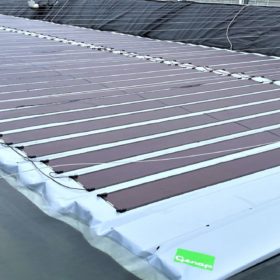
Lightweight solar for agricultural water reservoirs
The Genap Energy Cover uses HyET Solar Powerfoil thin-film solar modules, rated at 12.0% efficiency, for agricultural water storage and reservoirs, with an initial focus on the greenhouse and horticulture markets in the Netherlands. Genap said a 12kWp test setup had a generation density of 60W/m2, rising to 120W/m2 within a year, with an eventual target of 165W/m2.
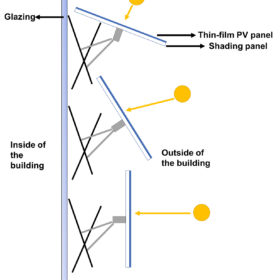
Designs, control strategies for PV-integrated shading devices
Photovoltaic shades in buildings offer energy efficiency and electricity generation, but an international research group says their commercial viability will depend on the control strategies used to optimize performance.

Could ‘hot carrier’ solar cells break the theoretical efficiency limit?
Up to 50% of the energy absorbed by a solar cell is lost as heat. Scientists are now developing a third generation of “hot carrier” solar cells that take advantage of this heat, potentially breaking the Shockley-Queisser limit of silicon-based PV.
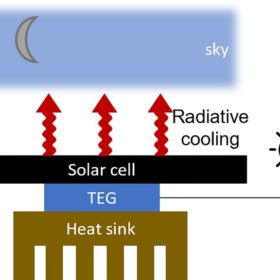
Radiative cooling-based solar cell with 50 mW/m2 of generation at night
Stanford University scientists have developed a solar cell with 24 hours of power generation via an embedded thermoelectric generator, which extracts power from the radiative cooler at night. Extra daytime power from excess heating comes from the cell itself.
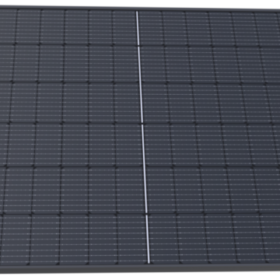
Boviet Solar shifts focus to 600W modules, N-TOPCon, HJT cells
Boviet Solar has announced plans to rebrand its modules, while shifting its focus to new cell technologies.

SEIA speaks about potential devastation of solar anti-circumvention probe
The Solar Energy Industries Association (SEIA) said that 90% of respondents to a recent survey about the US anti-circumvention investigation expect a severe or devastating impact on their businesses due to the ongoing probe.
Power-to-gas-to-power designs to incorporate hydrogen in solar-wind microgrids
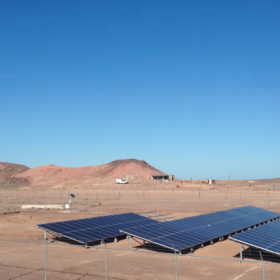
Researchers in Mexico have looked at integrating hydrogen-based power-to-gas-to-power into an existing rural microgrid. They said this solution could become competitive if electrolyzer, fuel cell and hydrogen tank costs are halved, or if diesel prices keep rising.
