
Photovoltaics for curved surfaces
Researchers in Japan have used heat-shrinkable polymers to laminate organic photovoltaics onto curved surfaces. The process improves efficiency while minimizing damage to photovoltaic components.

US government extends Section 201 tariffs on imported PV panels, cells
The Biden administration has upheld an exclusion for bifacial panels in its new extension of Section 201 tariffs, while ramping up the annual tariff rate quota for cells to 5GW.
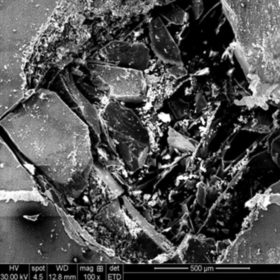
Multiple effects of potential-induced degradation on solar module performance
UK researchers have analyzed the multiple effects of PID on 28 modules at an outdoor testing field. The novel approach considered all multiple PID effects through a comprehensive analysis, which included power losses, hotspots, mm-level defects, and the performance ratio.
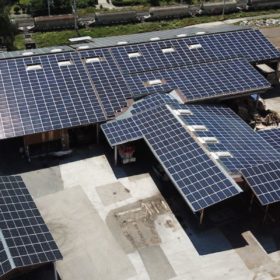
Insolvent Austrian module manufacturer Energetica finds investor
The new owner — Wien-based Irma Power GmbH — is planning to maintain and expand module production at the company’s manufacturing facility in Liebenfels.
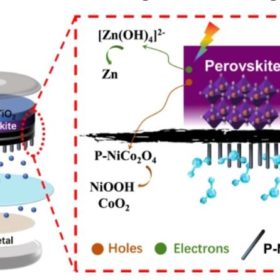
PV-powered rechargeable aqueous zinc battery
Conceived by scientists in China, the device combines an integrated carbon-based perovskite solar cell module with a rechargeable aqueous zinc metal cell. The proposed system achieved an overall efficiency of 6.4%, and a steady operation for more than 200 cycles with little performance degradation.
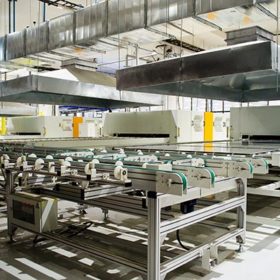
India targets domestic production with 40% PV import duty, boost to manufacturing-linked incentive
India’s Union Budget, presented this week by Finance Minister Nirmala Sitharaman, allocates an extra INR 19,500 crore ($2.6 billion) to the production-linked incentive scheme for solar from April.
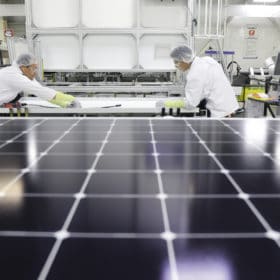
Maxeon extends IBC modules’ product, perfomance warranty to 40 years
The manufacturer said the 40/40 warranty is the longest and most comprehensive combined warranty offered in the photovoltaic industry to date. The product line is sold in most countries outside the United States and Canada under the SunPower Maxeon brand.
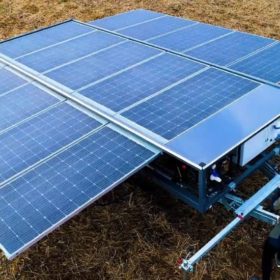
Solar trailer for off-grid applications from France
Developed by French start-up Ecosun, the trailer is equipped with 15 solar panels with output of 360 W and batteries with a storage capacity of 23 kWh. It can be used for construction sites, military camps and water pumping systems.
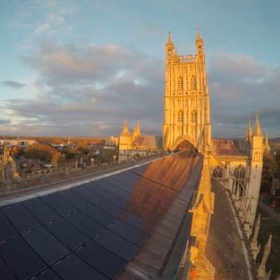
Solar for churches
Churches use energy mostly during the day, which makes them ideal buildings to deploy solar panels. Scientists in the United Kingdom have assessed the financial viability of a rooftop PV project for Bath Abbey and found that it could become profitable after 13 years.
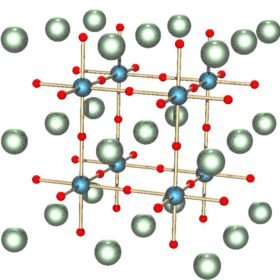
Perovskite solar cell with 24.18% efficiency via low-dimensional perovskitoids
Chinese scientists used perovskitoids as 1D and 0D capping layer materials for the cell’s perovskite layer. These materials enabled an effective and all-around passivation of the perovskite surfaces and grain boundaries, which prevents undesired Shockley-Read-Hall recombination and material degradation. The device achieved a power conversion efficiency of 24.18%, an open-circuit voltage of 1.151 V, a short-circuit current of 25.96 mA/cm2, and fill factor of 80.91%.
