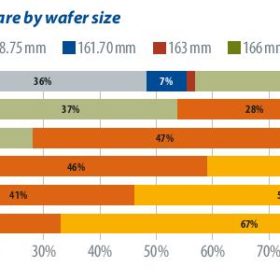
A 200 GW solar year in 2022
Structural imbalances in the supply chain and the energy intensity and consumption controls that China imposed in late September have caused prices for most PV module materials and components to continue to rise. Shipping fees and PV plant construction costs also remain high. PV plants in many regions will therefore be postponed until next year, but it remains unclear when module prices will start to fall. Despite these challenges, the global race to cut carbon emissions continues, and InfoLink’s Corrine Lin forecasts a bright future for PV deployments in 2022.
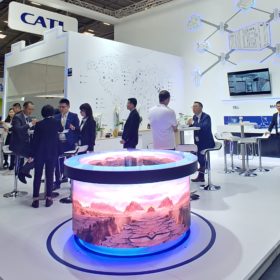
Chinese Industry Brief: CATL inaugurates 120 GWh lithium-ion battery factory
The lithium-ion battery producer began manufacturing activities at its new factory in Ningde city, Fujian Province. Aiko Solar has also secured 4,515,000,000 wafers for the next three years through three different supply deals.
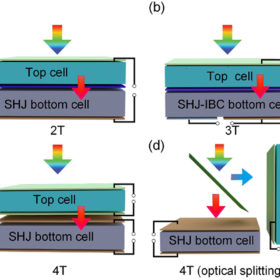
An overview of heterojunction solar cell technologies
Scientists at the Nankai University in China have provided a comprehensive overview of current research on silicon heterojunction-based tandem solar cells (SHJ-TSCs) and shared their expectations of future developments in this field.
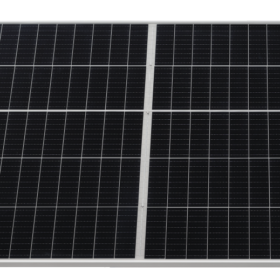
Risen claims 23.65% efficiency for heterojunction solar module series
The module series also achieved a maximum power of 721.016 W. The result has been confirmed by TÜV Rheinland.
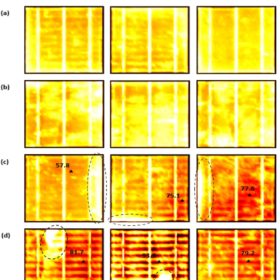
Damaging defects in silicon solar cells
Scientists in the UK investigated the relationship between two of the most worrisome defects that can affect solar cells in the field – cracking and hotspots. Their work analyzed solar cells with different levels of cracking under varying light conditions, finding that the most severely cracked cells were considerably more likely to run at high temperatures and form damaging hotspots.
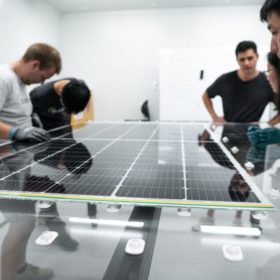
Australian startup SunDrive fabricates its first full-sized panel
Sydney-based startup SunDrive has given itself an early Christmas present in the form of the fabrication of its first full-sized panel. This panel marks the most recent milestone on the road to commercialization for SunDrive, which set a new world record for commercial-sized silicon solar cell efficiency in September.

Low-light dye sensitized solar cells for connected devices
Ambient Photonics has developed solar cells that can be used by internet-of-things (IoT) and smart home device companies. It is working to secure funds from the U.S. government to build a factory in the United States.
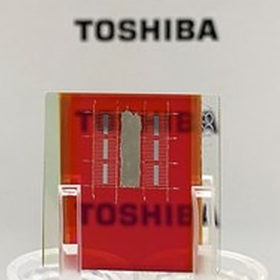
Toshiba claims 8.4% efficiency for transparent cuprous oxide solar cell
The record efficiency was achieved by engineering the cell with reduced copper(II) oxide (CuO) and copper (Cu) impurities in the thin-film deposition. It showed an open-circuit voltage of 1.13 V, a short-circuit current of 10.63 mA/cm2, and a fill factor of 0.696.
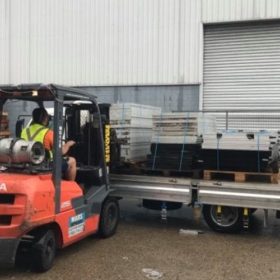
Australia prepares for first solar ‘upcycling’ facility while recycling operations expand
As Australia stares down a deluge of worn out solar panels, recycling – and indeed upcycling – programs are grinding into gear. In Victoria, a site has been found for Australia’s first facility to recover and reuse solar module materials, while Reclaim PV has extended its manufacturer partner and pickup location lists.
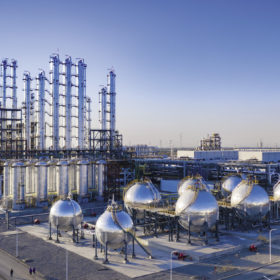
Chinese PV Industry Brief: Daqo announces $5.2bn investment to expand capacity
The polysilicon maker has announced it wants to build another factory in in Baotou City, Inner Mongolia. Elsewhere, the National Energy Administration has said new PV installations for the first 11 months of the year totaled 34.83 GW.
