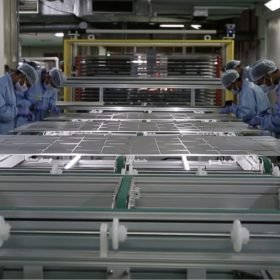
ICRA expects strong demand outlook for Indian solar manufacturers
As Indian solar manufacturers relying on imported cells remain exposed to price fluctuations, timely commissioning and ramp-up of ongoing capex in the module manufacturing value chain remain critical in the near to medium term.
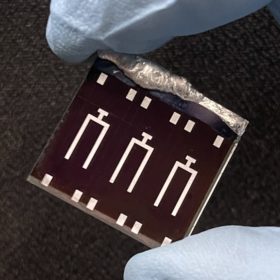
CISSe solar cell with record-breaking efficiency of 14.4%
Korean researchers have built a CISSe solar cell that can be used as a bottom cell for applications in tandem cells with a top cell based on perovskite. In the manufacturing process, they replaced the vacuum technology with air annealing and the result was a record-breaking efficiency combined with potential lower production costs.
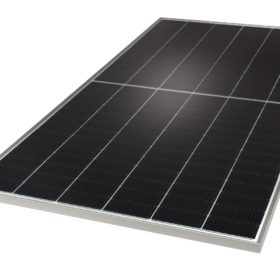
Hanwha Q Cells launches 590W solar module with 21.7% efficiency
The Q.Peak Duo XL-G11.3 panel is currently the largest and most powerful panel produced by the Korea-based manufacturer. It features a temperature coefficient of -0.34% per degree Celsius and comes with a 25-year linear performance warranty.
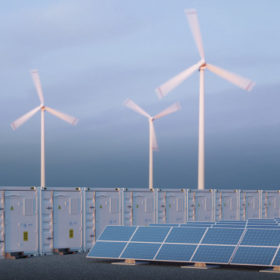
The Hydrogen Stream: Europe’s largest green hydrogen project takes shape
Production for the HyDeal project is planned to start in 2025; the total installed capacity is expected to reach 9.5 GW of solar power and 7.4 GW of electrolyzers by 2030. Elsewhere in the world, India and Brazil are preparing rules and laws to promote green hydrogen, while research activities continue to increase hydrogen fuel cell’s efficiency and hydrogen’s use in the aviation sector.

Flexible PV panels based on hyperconnected back-contact solar cells
US start-up mPower Technology is scaling up its flexible crystalline silicon solar module technology for spatial and terrestrial applications. The back-contact solar panels consist of micro-singulated silicon dies that are “hyper-interconnected” in series or in parallel. The devices have efficiency ranging from 22 to 23% depending on the size or applications.
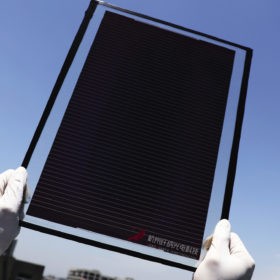
Chinese PV Industry Brief: Microquanta builds 12 MW ground-mounted project with perovskite solar modules
In other news, Haiyuan Material (HYM) said it will commission its 600 MW heterojunction cell factory in July and Polysilicon supplier Daqo announced it is seeking to raise RMB11 billion ($1.74 billion) through a share private placement.
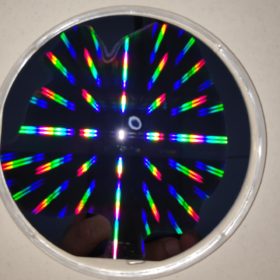
Novel IBC solar cell architecture based on crystal photonics shows efficiency potential of 29.1%
Scientists in Germany designed a poly-Si on oxide (POLO) interdigitated back-contact (IBC) solar cell integrating photon crystals and found this architecture has the potential to reach a power conversion efficiency of over 28%, which would be 1% higher than the current practical limit set by the scientific community. They also found that by improving passivation, the efficiency may be raised up to 29.1%.

Work begins on world’s second largest PV system on a stadium roof
The stadium of German football club SC Freiburg will host a 2.4MW rooftop solar array that will be built with heterojunction modules provided by Swiss manufacturer Meyer Burger.
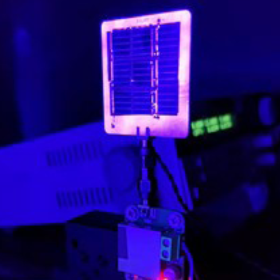
Photovoltaics for underwater wireless communication
Researchers in China used commercially available solar cells to create an underwater optimized lens-free system for high-speed optical detection and have found that the PV devices enable a much larger detection area than commonly used photodiodes.
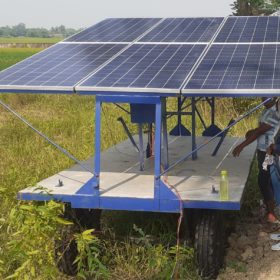
Mobile solar pump for remote areas
Researchers at the Indian Institute of Technology Bhubaneswar have developed a solar power system that can be easily moved between farms to pump water for irrigation. The kit comprises solar panels and an inverter to power a surface-mounted pump.
