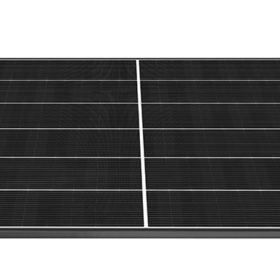
Panasonic unveils 410 W solar panel with 22.2% efficiency
The new heterojunction module series is compatible with Panasonic’s Evervolt battery and has a power output ranging from 400 to 410 W. It also features a temperature coefficient of -0.26% per degree Celsius.
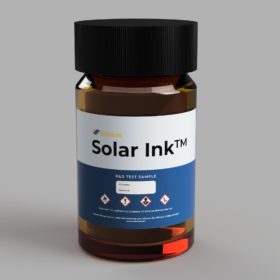
Perovskite ink for flexible solar panels
Developed by a Canadian start-up, Solar Ink can be used to create standalone perovskite solar modules or it can be combined with existing solar modules in a tandem configuration. It can be coated on both flexible and rigid substrates, resulting in translucent solar cells which, in turn, can be used to produce flexible and light modules for application in solar windows and vehicle-integrated photovoltaics.
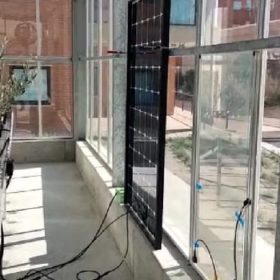
Modeling method for agrivoltaics in greenhouses
Spanish researchers have developed a new modeling technique to assess the performance of semi-transparent PV systems for greenhouses. Their novel approach considers the broadband and spectral content of the irradiance, the solar cell technology and its performance metrics, and the relationship between the photosynthetic rate and the effective photon flux that falls on the crops.
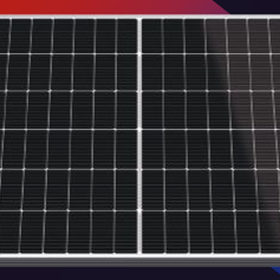
Seraphim releases PV module series with 595/670W of output, up to 21.57% efficiency
Seraphim’s new solar modules are available in monofacial and bifacial variants. They rely on multi-busbar technology and are built with 210 mm silicon wafers.

Work underway on Tesla’s rooftop solar system in Texas
A drone pilot has discovered that Tesla is starting to install solar panels, racking and inverters on the rooftop of a manufacturing facility it is building in Texas.

Sunman opens 1GW lightweight PV module factory
Sunman Energy claims the new factory, located in Yangzhong City in China’s Jiangsu province, is the world’s largest production facility for lightweight photovoltaics.
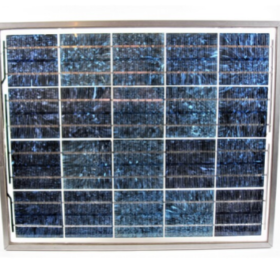
Solar module tech from oldest PV system in Netherlands
A solar panel on display at a science museum in the Netherlands is one of 2,748 modules that were used for the country’s oldest PV system. The module has an efficiency of around 9% and a power output of 18W. It was manufactured by Germany-based AEG-Telefunken in 1982.

All-polymer organic solar cell with 16.05% efficiency
The device achieved the highest efficiency and fill factor ever reported for an all-polymer solar cell based on polymerized small molecular acceptors. The cell was built with a top donor material known as PBDB-T and an electron acceptor made of the polymer PYT.
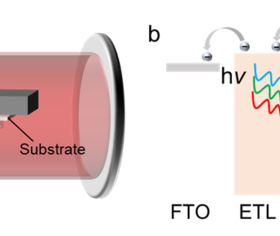
Cadmium selenide solar cell with 1.88% efficiency
The cell may be potentially used as a top subcell in tandem crystalline silicon-based devices. It was built with CdSe thin film with a direct bandgap of 1.72 eV.

Solar supply chain trouble to ease this year, according to analyst
Wood Mackenzie has predicted solar equipment cost increases will ease back after last year saw the average cost of solar electricity rise for the first time in the Asia-Pacific region.
