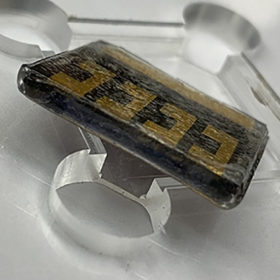
Lead absorbing encapsulant for perovskite solar cells
Scientists in the United States developed what they describe as a ‘scotch-tape like’ solution, which can absorb potential lead leakage from perovskite solar cells, preventing the toxic material from entering the environment. The tape, according to the scientists, can easily be integrated with existing encapsulation strategies, and was shown to absorb 99.9% of lead leaked from cells from that were severely damaged.

SolarPower Europe highlights Polish rooftop incentive as case study for the effectiveness of policy support
The Euro trade body has promised to monitor the developing solar jobs market annually from now on, and pointed to Poland’s position at the top of the tree of EU member states for PV jobs last year as evidence the technology can still benefit from legislative backing.

OCI reports strong sales growth for polysilicon business
High polysilicon prices helped South Korean supplier OCI to achieve strong results in the third quarter. Tight supply and demand conditions will likely continue until the first half of 2022, the company said.
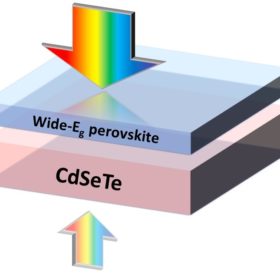
Bifacial tandem perovskite-CdSeTe solar cell with 20% efficiency
Developed by U.S. scientists, the cell is claimed to achieve an equivalent bifacial efficiency of more than 20% with an open-circuit voltage of more than 2 V. The choice of the bifacial architecture is intended at increasing the device’s power yield in order to offset the high costs for producing the CdSeTe sub-cell.
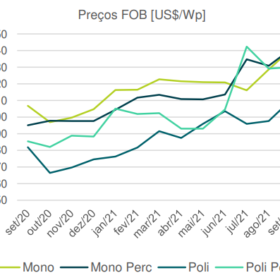
PV module import prices up by 20% in Brazil since last December
Brazilian consultancy Greener reports that monocrystalline PERC modules are currently being sold at an average price of $0.24/W in the Brazilian PV market, but prices may keep rising, possibly into 2022.
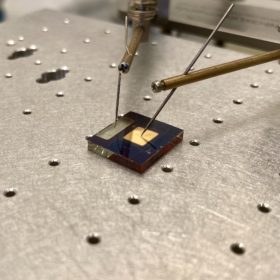
Cadmium sulfide, a poor partner for selenium tandem solar cells
A Danish-German research team has shown that using cadmium sulfide as an n-type partner in heterojunction tandem solar cells based on selenium does not produce satisfying results. The team has discouraged other scientists from following the same path.

Future climate scenarios to adversely affect Australia’s PV capacity
Australia is blessed with an incredible solar resource, but it will be diminished by global warming.
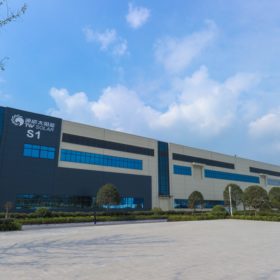
Chinese PV Industry Brief: Daqo wiped debts as poly price continued to rise
The worldwide solar boom is proving so profitable the polysilicon manufacturer is even thinking of turning to PV panels to power its manufacturing operations, rather than cheap coal.
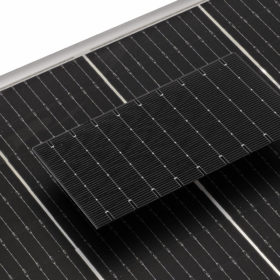
Jinko and Tongwei strengthen supply chain tie-up
The former has committed to invest more than $70 million into a 100,000-ton polysilicon production line in Leshan that will then supply it with 30,000 tons of its output annually.
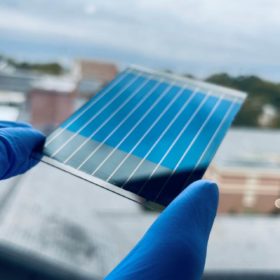
Lead-absorbing encapsulation for 18.5%-efficient mini perovskite solar module
The solar module has an area of 31.5cm2 and is relying on perovskite cells with an efficiency of 22.9%. It was encapsulated with a special ionogel that is claimed to enhance the module’s impact resistivity and stability, as well as to reduce the possibility of lead leakage.
