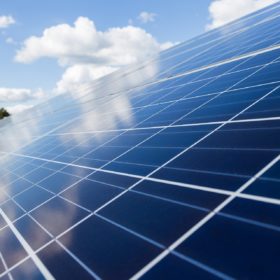
Solar could help Azerbaijan consolidate gains in Nagorno Karabakh after recent conflict
That was just one of the revelations of the latest Dentons’ Guide to renewables investment in Europe, which also noted solar plants could be switched off in Slovakia, Ireland could go either way on clean power pricing, and Luxembourg is struggling with a surprising headache.
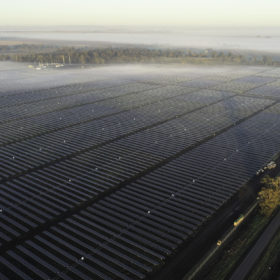
Chinese PV Industry Brief: More module and glass capacity
Risen Energy is planning to add 6 GW of module capacity to its factory in Jiangsu province and Flat Glass wants to add six production lines to its facility in Zhejiang. Meanwhile, JA Solar says it shipped 15.88 GW of solar products last year.
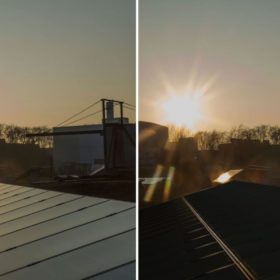
German start-up develops anti-reflective film claimed to improve PV module performance by 10%
German start-up Phytonics has developed the film by taking inspiration from nanostructures in plants. In solar cells, the film enables a broader absorption spectrum and a higher angle of light-incidence tolerance.
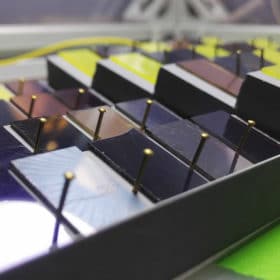
MIT scientists reveal method to identify stable perovskites
U.S. researchers are using a data fusion approach to identify the most stable perovskites for PV cells. Their machine-learning method combines perovskite test results with first-principles physical modeling to identify the best candidates.

OCI increases production capacity at Malaysian polysilicon factory
OCI has revealed plans to invest $55 million to expand production at its Malaysian manufacturing facility from 30,000 to 35,000 metric tons.
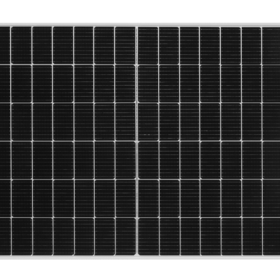
JinkoSolar unwraps 415 W PV panel for rooftop applications
The new, Tiger Pro 54HC panel is based on a 182mm, 54-cell design and exhibits an efficiency of up to 21.3%. The manufacturer claims the new product is particularly suitable for residential projects in high snow or high wind load areas.
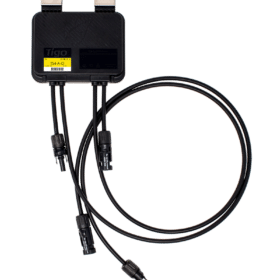
Tigo launches optimizer for high-power modules
The IEC certified product has a maximum wattage of 700 W, a maximum current of 15 A, and a maximum voltage of 80 V.
Shuifa Singyes reports annual results
The bailed-out solar company has seen its fortunes reverse since state-owned Shuifa rode to the rescue but it still has some assets frozen as the result of civil cases.

Hanwha Q Cells files patent infringement suits against Astronergy in Germany
The legal action against Astronergy follows the patent lawsuit initiated by Hanwha Q-Cells in Germany, the USA and Australia, in March 2019, against Longi, Jinko Solar and REC.
18.3%-efficient perovskite solar cell for automatic light adjustment
Chinese scientists have powered two electrochromic devices with a perovskite solar cell based on a hole transporting material made of poly(triarylamine) (PTAA). The cell has an open-circuit voltage of 1.02 V, a short-circuit current of 22.8 mA/cm2, and a fill factor of 78.4%. When solar radiation is higher, the cells drive the electrochromic devices into a dark state, which in turn reduces the light that can enter a building.
