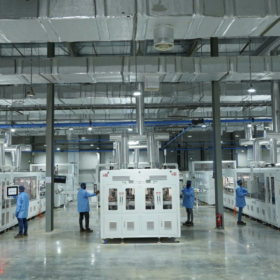
India’s PLI scheme drives 18.5 GW of solar module capacity up to June
India’s Production Linked Incentive Scheme for High Efficiency Solar PV Modules (PLI) has led to 18.5 GW of module capacity, 9.7 GW of solar cell capacity and 2.2 GW of ingot-wafer capacity being established as of June 30 2025. The program has awarded a total of 48 GW of module manufacturing capacity.
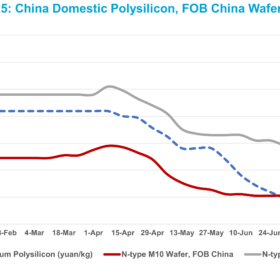
China wafer, polysilicon prices climb 33% since early July
In a new weekly update for pv magazine, OPIS, a Dow Jones company, provides a quick look at the main price trends in the global PV industry.
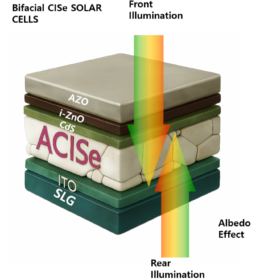
Scientists build bifacial CIS solar cell with record efficiency, power density
Researchers in South Korea have demonstrated a lower temperature process for bifacial copper, indium, selenium (CuInSe₂) solar cells with a rear-side efficiency of 8.44% and 15.30% on the front. The device has been developed for applications in tandem solar cells.
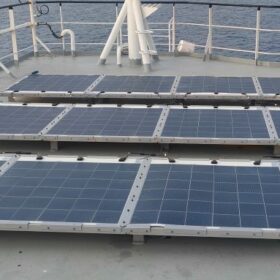
Glass-free PV modules tested on bulk cargo ships
Japan’s Eco Marine Power announced a trial of an integrated solar PV system aboard a bulk cargo ship to demonstrate both practicality and performance. It features glass-free monocrystalline silicon modules from U.S.-based Merlin Solar Technologies.
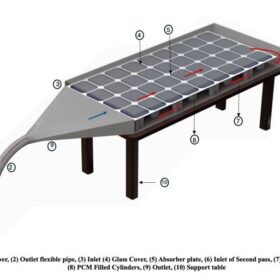
Photovoltaic-thermal solar air heater based on PCM cylinders, air convection
Researchers in Malaysia designed a photovoltaic-thermal system that can be used in solar drying, space heating, rooftop systems, and off-grid thermal applications. It relies on a double-pass cooling technique based on air convection and phase change material that can reportedly increase PV efficiency from 7% to 9% and thermal efficiency by 31.45%.

Agrivoltaics on rice fields, not a lost cause
Researchers in Japan have made another attempt to make agrivoltaics on rice fields technically and economically feasible, despite well-known productivity issues when rice is grown below solar modules. They used double-axis tracking, finding potential with careful management of shading and tilt angles.

Qcells confirms US customs detained solar cell imports from South Korea
Qcells has confirmed that US Customs and Border Protection (CBP) has detained an unspecified volume of its solar cell imports from South Korea. The company claims the cells do not contain components from Xinjiang, China and says it is working with CBP to resolve the issue.
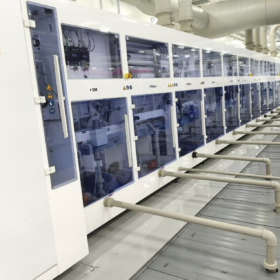
India approves solar cell makers with 13 GW of annual production capacity
India has approved six manufacturers for its Approved List of Models and Manufacturers (ALMM) for solar cells, totaling 13 GW of annual production capacity. The list includes FS India (First Solar’s India unit), Jupiter, Emmvee, Mundra (Adani), Premier Energies, and ReNew.

Tindo Solar to scale output to 180 MW with Australian government grant
Australian solar module manufacturer Tindo Solar will look to ramp up domestic production capacity after securing funding through the federal government’s $1 billion Solar Sunshot Program.

China poised to remain dominant PV supplier through 2030
New research from Switzerland showed that the recent efforts to counterbalance the dominance of China in the PV industry may lead to “cost-significant” inefficiencies across the entire supply chain. The scientists found, however, that achieving regional supply chain goals can benefit the global PV ecosystem.
