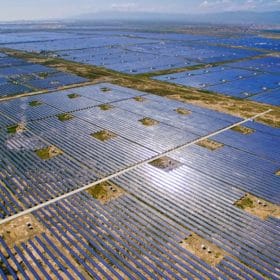
China solar PV demand could surpass 100 GW in 2022; ‘massive’ production overcapacity predicted
According to Asia Europe Clean Energy (Solar) Advisory Co. Ltd, demand for solar PV in China could “effortlessly” surpass 100 GW in 2022, following a year of “flat” demand in 2021. It adds that a “massive overcapacity” situation in the production sector is looming. Meanwhile, the distributed solar PV market is on track for huge growth, with potential for annual demand to reach upwards of 20 GW+ from next year.
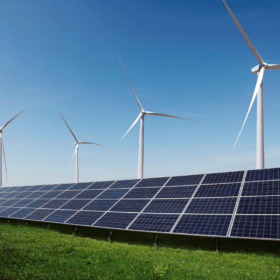
Chinese PV industry brief: Jinko Power announces 1.5 GW solar project and Gaoce eyeing 10 GW of wafer production
The Jinko Power unit of the solar manufacturer is planning a huge hybrid solar and wind project and China Energy Engineering is also making, slightly more modest, plans for generation capacity, as poly maker GCL continued its great PV project sell-off.
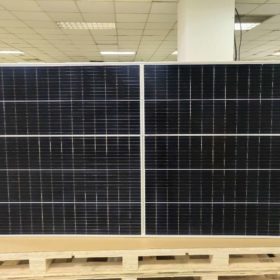
Trina Solar achieves 23.03% efficiency for 210 mm PERC solar module
The result was confirmed by Germany’s TÜV Rheinland and TÜV Nord.

Do engineers dream of solar panel efficiency?
A true next generation of solar cell technology is upon us. It is time to contemplate the benefits.
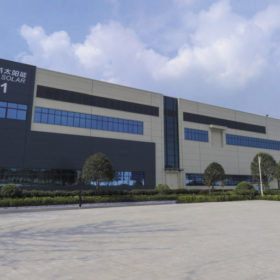
Chinese PV Industry Brief: Tongwei plans 200,000 MT polysilicon factory
The new polysilicon factory will be located in Leshan City and will be built thanks to an investment of $2.1 billion.
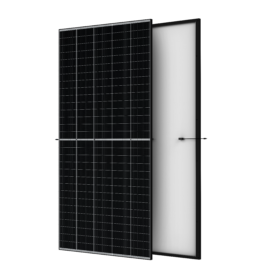
Trina launches 510 W black frame solar panel
The latest product in the Vertex series from the Chinese manufacturer has an efficiency of 21.2%. It was designed for commercial rooftop projects.
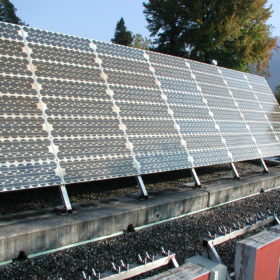
Exploring the depths of Europe’s oldest grid-connected PV system
A 10 kW PV system has been feeding electricity into the Swiss power network since 1982. A research team has investigated the performance of the array’s first 35 years of life and has found that solar modules can target – at least in temperate climates – service lifetimes of 35 years, and that the bill of materials matters, a lot!
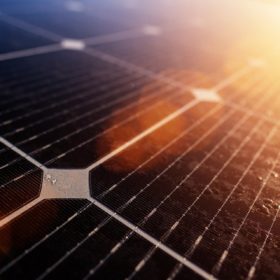
All solar cell efficiencies at a glance
The research group led by Professor Martin Green has published Version 58 of the Solar cell efficiency tables. He spoke with pv magazine about the criteria with which these tables are compiled and the importance of result certification by independent third parties.
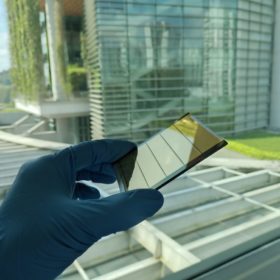
Proper recycling could help perovskite modules to outcompete rivals
Proper recycling strategies for perovskite modules could ensure sustainability and improve energy payback times, according to US researchers. They claim that the best recycled perovskite cell architecture could produce an energy payback time of about one month, versus 1.3 to 2.4 years for crystalline silicon modules.

Nanoparticles enable completely clear, industry-sized solar windows
Australian company ClearVue Technologies says it has a fully transparent, scalable, industry-ready solar window in production. It claims that it’s now just 18 months away from cracking 5% efficiency, thanks to a research partnership.
