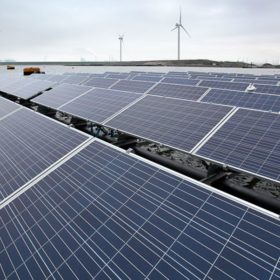
System design key to enhancing cooling effect of water in floating PV
Researchers in the Netherlands and Singapore have measured irradiance-weighted average temperatures of floating PV systems in both countries and have compared the results with reference rooftop and ground-mounted PV systems. They have discovered that floating PV systems with open structures, which allow wind to pass beneath the modules, can provide a higher heat loss coefficient.
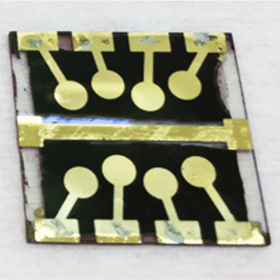
Water-splitting tech to reduce moisture in perovskite solar cells
Italian researchers have engineered a hole extraction layer with water-splitting additives to reduce the impact of moisture in perovskite PV devices. They claim that the method ensured a power conversion efficiency of more than 9% in perovskite cells stored for a month in a water-saturated atmosphere.

Chinese PV Industry Brief: Huge orders for Trina Solar and JYT Corporation
Trina Solar has secured a 4 GW solar module order from US company Nextera Energy and wafer manufacturer JYT Corporation closed deals to supply a total of 1,906,000,000 wafers.
SunPower to close module factory in Oregon in June
The US module maker plans to start shutting down production in Hillsboro in March. Around 170 employees are affected by the closure. At the same time, however, Sunpower is examining other options for continued operation.
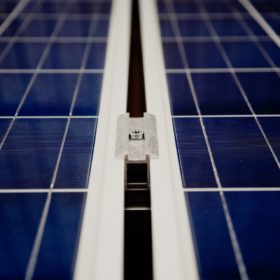
‘There is no clear best module configuration under partial shading’
A Slovenian research team has analyzed the behavior of a full-size cell PV module and several 1/6 cell panels under partial shading and has come to the obvious conclusion that the cell cut panels suffer fewer energy losses. They also found, however, that the orientation of the cells connected in series should be aligned as much as possible with the shade shape to lower the losses and to minimize reverse cell voltage.
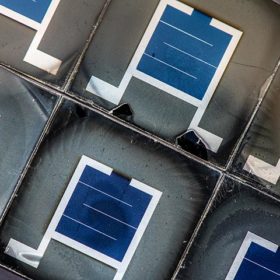
The state of the art in perovskite tandems
A new paper from scientists in China and Canada examines the recent progress in the development of perovskite-silicon tandem cells, finding a technology that’s poised for rapid commercialization, with a few research challenges still to overcome. These are primarily related to ensuring the perovskite layer can match the lifetime of the silicon cell underneath.
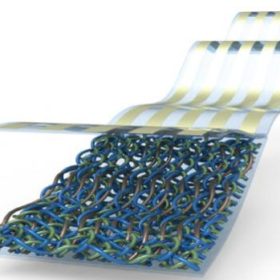
Herbicide may improve organic cell efficiency by up to 1.6%
Researchers in Saudi Arabia claim to have increased the efficiency of organic PV devices with diquat, a compound used in herbicide. The molecular diquat dopant increased optical absorption and the lifetime of electrical charges when light was absorbed.

Indian reliance on polycrystalline tech production leaves it trailing China
Polycrystalline PV technology, which is seeing its market share tumble on the global stage, still dominates India’s small solar manufacturing base and is emblematic of the R&D shortfalls in the sector, according to a survey of the state of the industry.
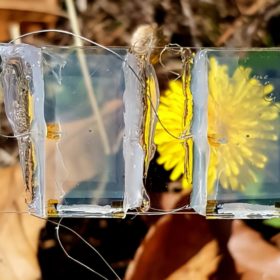
New solar window tech with 2.1% efficiency
Researchers in South Korea have fabricated a fully transparent solar cell which they claim has a transmittance for visible light of more than 57%. The integrated device generates enough power to move a small-sized motor.
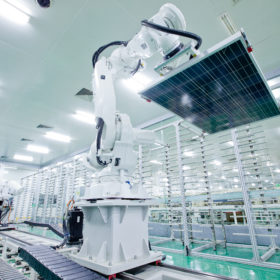
JinkoSolar claims 24.9% efficiency for n-type monocrystalline cell
The result was confirmed by Germany’s Institute for Solar Energy Research (ISFH).
