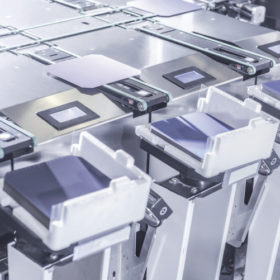
Meyer Burger, CSEM to develop new PV cells, modules
Meyer Burger has extended its seven-year tie-up with the Swiss Center for Electronics and Microtechnology by three years. They aim to achieve module-level production efficiencies of more than 24%, while also cutting costs.
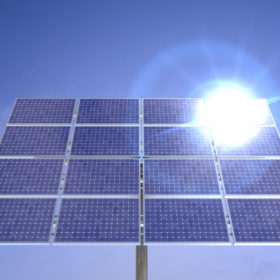
The best PV module cooling technique
An international research team has analyzed all existing cooling technologies for PV panels and has indicated the current best options and future trends of research. According to its findings, active water cooling, although expensive and not particularly practical, is the most effective cooling technique while passive cooling systems, despite being easy to apply, have still limited possibilities.
Chinese PV Industry Brief: Beijing reluctant to ease restrictions on PV glass sector
China will not ease restrictions on new investments in additional PV glass production capacity, according to a newly published draft document from the Ministry of Industry and Information Technology.

Canadian Solar preps to launch 600+ W module
Bigger PV module designs are now hitting the market, but the production of larger, more powerful solar panels is challenging. Canadian Solar is launching its new Series 7 modules with pv magazine in a webinar on Oct. 29. Our editorial team recently caught up with Canadian Solar’s chairman and CEO, Shawn Qu, and director of module R&D, Alan Xu, to discuss the company’s latest efforts to shake up the market.
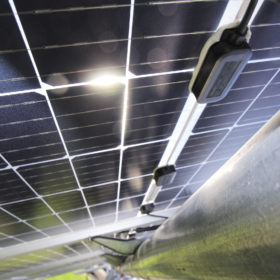
Bayesian algorithm to reduce LCOE of bifacial projects
German researchers have proposed a new model, based on a range of parameters, to influence the LCOE of bifacial PV plants, with a focus on components, land costs, inclination angles, albedo, and weather conditions.

France to support BIPV solar tiles with additional incentives
Barbara Pompili, the French minister of ecological transition, recently announced new bonus incentives for BIPV projects during a visit to a Sunstyle factory that aims to produce 1 GW of “Made in France” solar tiles by 2025.
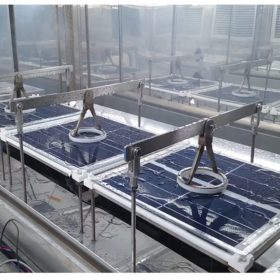
A stress test for all seasons
Scientists led by the U.S. National Renewable Energy Laboratory (NREL) have developed a new stress testing protocol for PV modules, one designed to simultaneously expose modules to multiple stresses, as they likely would be in the field. Putting modules through this test, the researchers have already been able to reveal new information regarding backsheet degradation, and they promise new insights into other degradation mechanisms both known and unknown as well.
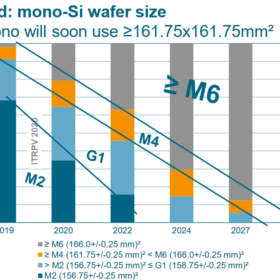
Update of the ITRPV roadmap shows three wafer formats will prevail
In an update to its International Technology Roadmap for Photovoltaics, the German engineering association the VDMA said that solar module sizes of up to 4.0m² may be brought to mass production in the future.

Australian scientists shed light on perovskite problem
Australian researchers have made a significant discovery in the fight against light-induced phase segregation in next-generation PV cells.
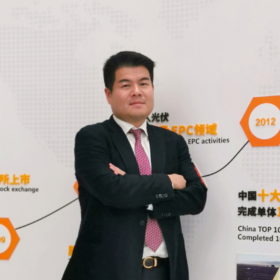
CEO Interview – SPI 2020, USA. Interview with William Sheng, President of Talesun Solar
As one of the world’s top ten PV module manufacturers and an experienced EPC supplier of solar PV power stations, Talesun Solar expanded its business globally based on steady capacity growth and targeted marketing actions. Before the largest solar PV exhibition and conference of the North America, the Solar Power & Energy Storage International (SPI) 2020, PV Magazine has the opportunity to interview with Mr. William Sheng, the president of Talesun Solar, and listen to his view of the PV market, module products with different techniques, and other hot topics.
