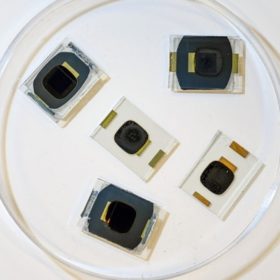
Australian scientists claim breakthrough in perovskite stability
In a world-first, perovskite solar cells developed by Australian scientists have passed a series of heat and humidity tests using a low-cost solution to overcome some of the challenges that are hindering the technology’s commercialization. The scientists did this by suppressing the decomposition of the perovskite cells using a simple, low-cost polymer-glass blanket.
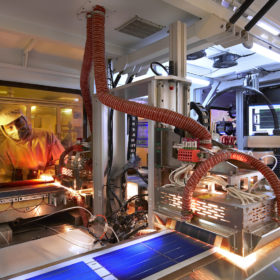
Chinese PV Industry Brief: Jinko Power and Trina Solar go public, profit growth for Daqo, and new dates for SNEC
Jinko Power has moved forward with plans to list shares on the Shanghai Stock Exchange, while Trina Solar said that the China Securities Regulatory Commission has approved its application for its own initial public offering. Polysilicon producer Daqo, meanwhile, reported solid first-quarter results, and the organizer of the SNEC solar show changed the exhibition’s dates and location once again.
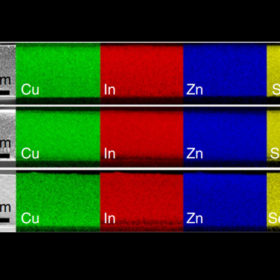
Lead-free quantum dot solar cells with 10% efficiency
Scientists in the United States have created a quantum dot solar cell which has a photon-to-electron conversion efficiency of 85%. The device is also said to exhibit remarkable defect tolerance and toxic-element-free composition.

Covid-19 weekly round-up: US job losses raise concern but France and China continued to add new solar
Cell supply shortages could kick-start manufacturing activity in India, EV car sales are braced for a fall while still gaining market share and a new date has been set for the world’s biggest solar trade show.

New 400 MW solar module factory for Germany
Production is set to start in the first quarter of next year at the planned fab in Greiz, Thuringia. The facility will manufacture 370 W panels featuring half cells, large wafers and nine busbars.
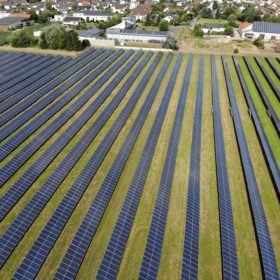
France added 176 MW of solar in first three months of the year
Quarterly new additions were 15% lower than in the October-to-December window. The France Territoire Solaire thinktank said the lower volumes could be explained by the initial impact of the coronavirus crisis.

A pressure-assisted technique to increase perovskite solar cell efficiency
Researchers in the United States claim to have significantly increased the efficiency of a perovskite solar cell by applying a range of pressures to the device. According to them, pressure-assisted processes such as lamination, cold welding and rolling/roll-to-roll processing can be used to improve interfacial surface contacts in perovskite cells.
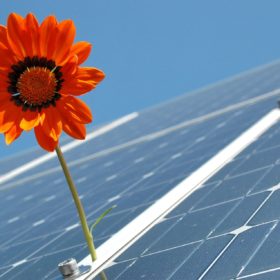
New method for life cycle assessment of PV technologies
Researchers in Australia have conducted a ‘cradle to grave’ life cycle assessment (LCA) of the four most widely used PV technologies. The academics say that cadmium telluride solar modules have the lowest life cycle impact, followed by amorphous, multi and monocrystalline silicon products.
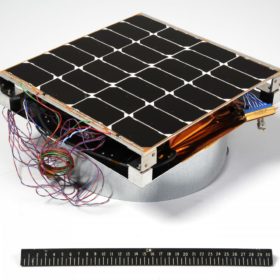
A PV antenna for solar power beaming from space to Earth
Researchers from the U.S. Naval Research Laboratory have launched first orbital experiment with space-based solar power. They have sent into space a 12-inch square tile photovoltaic module that is expected to test the viability of space-based solar power systems converting sunlight to microwaves outside the atmosphere.

Sunny regions could see one-cent solar within a decade
The solar learning curve usually applied to panel costs has been extrapolated to the larger, non-module element of the price of solar electricity generated by big projects, leading one commentator to predict new solar projects could be cheaper than legacy fossil fuel plants within 10-15 years in certain markets.
