
Taiwan’s URE signs 120 MW glass-glass bifacial module order
United Renewable Energy has signed a memorandum of understanding to supply project developer Ye Heng Power with 120 MW of its solar panels. It plans to start shipping the PV modules in the second half.
Hanergy’s Solibro Hi-Tech unit in liquidation
With the opening of insolvency proceedings, the business operations of the company were halted days ago. No potential investor could be found to take over the business.
A stretchable, transparent solar cell with 8% efficiency
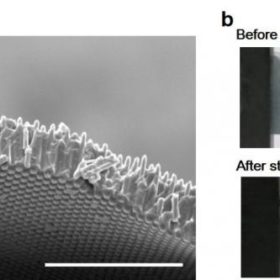
Korean scientists have unveiled a colorless device made of silicon microwire composites. The enhanced light absorption of the cell, the researchers claim, is due to the re-absorption of light by the microwires, which also benefit from an enhanced electric field.
Lessons to be learnt from Italy’s alleged PV fraud
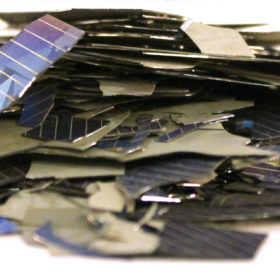
The alleged resale in developing countries of solar modules sent for end-of-life recycling in Sicily could have an important lesson for the PV industry: select reliable recycling entities to avoid potential trouble further down the line. The PV industry should also avoid another potential risk, that of the illegal disposal of PV waste outside the EU.
Another solar module factory in Algeria
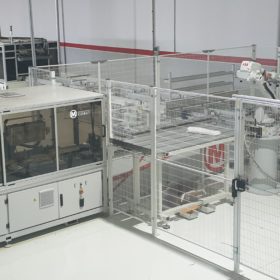
Algerian telecoms and renewable energy company Milltech is planning to begin producing panels at a new factory next month. The modules made there will chiefly be distributed in Algeria but the company also hopes to export.

A perovksite-silicon tandem cell with 25.7% efficiency
The device exhibited a small performance loss after a 400-hour thermal stability test at 85 degrees Celsius and after the same period under maximum power point tracking at 40 degrees Celsius, according to its developer. The cell was made by combining solution-processed, micrometer-thick perovskite top cells with fully-textured silicon heterojunction bottom cells.

Optimistic solar outlook in India dimmed by Covid-19
Developers are also expected to drag their heels over project completion during the first half of the year as the safeguarding duty applied to imported Chinese and Malaysian solar products is due to expire at the end of July.
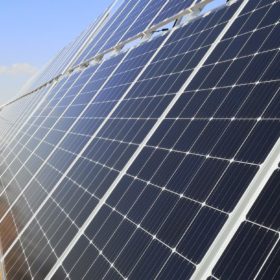
The weekend read: The way to the TOPCon
TOPCon cell technology has become one of the two leading next-generation options after mono PERC. But for the n-type architecture to truly become a rival to PERC, high-quality and cost-effective production technologies must become settled.
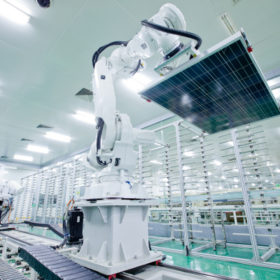
Jinko Solar raises Q4 2019 revenue guidance by 14%
Just before the end of 2019, the module manufacturer sold a few hundred megawatts more than it initially anticipated, prompting last-minute revisions to its preliminary earnings estimates for the fourth quarter and full year.

Canadian Solar claims 23.81% efficiency for n-type poly module
The Chinese-Canadian manufacturer said the new results improve upon its previous record by around 1%. The achievement has been certified by Germany’s Institut für Solarenergieforschung GmbH (ISFH).
