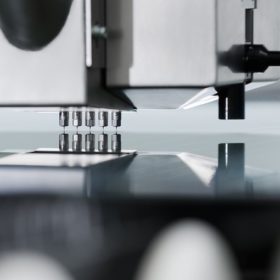
Hard times for German PV equipment providers
German engineering association the VDMA expects a difficult year because of the Covid-19 crisis. Sales had already dropped considerably last year and the current order intake level offers no glimpse of hope. However, the public health crisis may offer business in new markets determined to break a dependence on Chinese panels.
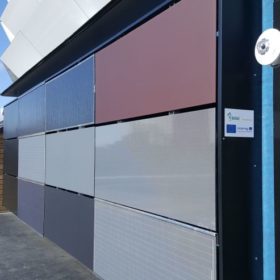
Colored PV module performance is underestimated
In a recent conversation with pv magazine Roland Valckenborg, business developer and project manager at the Netherlands Organisation for Applied Scientific Research (TNO), has described the results of a multi-year testing program for colored BIPV modules. Just a few years ago, it it was thought that power yield could be up to 50% lower than conventional panels, but tests have shown a difference of just 10%. Valckenborg says that losses can vary depending on the color of a panel.

REC Group mulls French module gigafactory
The Norwegian solar manufacturer is considering a 2 GW heterojunction solar module factory in Sarreguemines, in the northeast of the country.
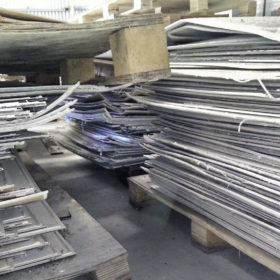
PV module recyclers aiming for high-purity material recovery
France’s National Institute for Solar Energy takes a look at the state of play in the European solar panel recycling industry.
Fine-tuning plasmonic solar cells
Two different studies published this week show new advances in the use of plasmonic enhancement to improve performance and stability of perovskite solar cells.
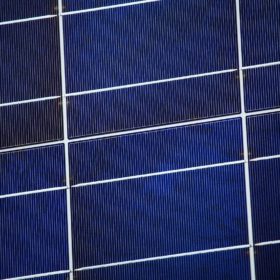
Assessing impact of residual stress in solar cells
Scientists in China have analyzed the impact of residual stress in triple-junction solar cells used in aircraft and satellite applications. The group observed damages such as holes, fractures of grid lines, cracks at the cell level, and fractures of the PV materials.

A gigawatt solar factory in Europe? Why it must be in France
With Swiss solar equipment company Meyer Burger laying plans for a module fab in North Rhine-Westphalia and Norwegian panel maker REC Group mulling a fab in Sarreguemines, northeastern France, Xavier Daval – from French renewables association the SER – says it is time Europe resumes its path to a stable solar manufacturing industry, not least because of the rising proportion of solar module costs accounted for by shipping.
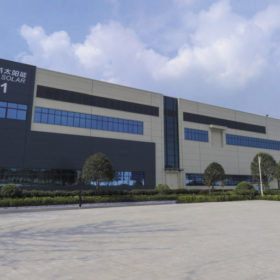
Chinese PV Industry Brief: Lower wafer prices, new modules, and a factory under construction
Longi has announced more cuts to wafer prices, while cell manufacturer Tongwei has started building the first phase of its 30 GW Jintang PV manufacturing base. Risen Energy has also released solid financials, while JA Solar has unveiled plans to start selling its 500 W-plus solar modules.
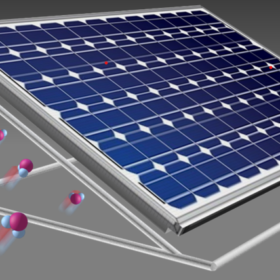
Harvesting atmospheric water to cool down PV panels
Scientists from Saudi Arabia have proposed a new PV panel cooling technique which employs an atmospheric water harvester. The device uses waste heat from the PV panel to collect atmospheric water at night and then releases it during the day to cool down the module. The researchers claim the device may also be improved to produce liquid water, which could be used for the cleaning of the modules.

500 W-plus panel race intensifies with JA Solar’s new module, Risen’s first shipments
Chinese manufacturer JA Solar has announced a new 525 W+ panel and said the product will be available from the second half. Domestic rival Risen has shipped the first batch of its high-powered modules and intends to stick to pre-Covid-19 plans to ramp up production.
