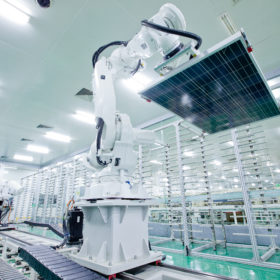
Jinko Solar the world’s biggest module provider again in 2019
The solar giant shipped 14.2 GW of modules last year, up 33% on 2018 for the high-water mark of another year dominated by Chinese manufacturers.

An inverted perovskite cell with 22.3% efficiency
Saudi researchers have developed a cell which is said to exhibit improved structural and optoelectronic properties as well as enhanced carrier mobility and diffusion lengths. The feat was achieved by reducing voltage losses using a new passivation technique.

Trimming optical losses in tandem perovskite cells
Spanish researchers have unveiled a monolithic nano-structured perovskite silicon tandem device they claim can reduce optical losses by more than a third compared to planar perovskite cells of the same kind.
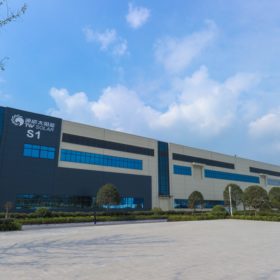
Tongwei to open new 30 GW cell fab in Sichuan
Construction of the $2.87 billion factory is scheduled to start in March and manufacturing activity should be launched in 2021.
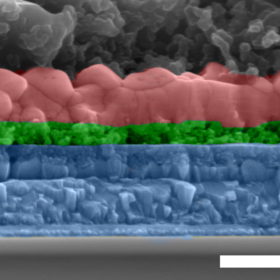
Japanese scientists trial printing on perovskite
Researchers from three Japanese universities have developed a process based on inkjet printing they say could reduce the cost of perovskite solar cell production. The group fabricated small cells with efficiencies as high as 13.19%, a figure they claim is promising enough to offer the possibility of scaling up to commercial production.

Russian scientists unveil new manufacturing process for III-V solar cells
Researchers have integrated A3B5 semiconductors on a silicon substrate in a prototype solar cell and claim the technique could enable the production of III-V solar cells with conversion efficiencies of around 40%.

Perovskite production without the side-effects
Chemists from Russia’s RUDN University have developed a series of compounds based on methylammonium iodide and iodine which they say could be used to make perovskite solar devices without toxic solvents. That would enable perovskite cells to be manufactured without chemical by-products.
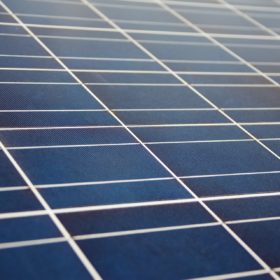
Parent company of Algerian module maker Condor reported to have filed for insolvency
The electronics manufacturer has a 130 MW capacity module production facility.
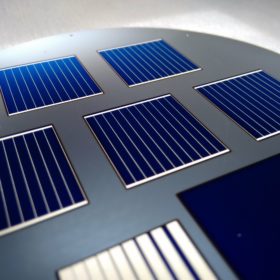
Silicon heterojunction solar cell hits 23.5% efficiency with new hole-selective contact
Researchers from Switzerland’s École Polytechnique Fédérale de Lausanne have used molybdenum oxide as the hole-selective contact in an heterojuction silicon cell. The scientists claim the compound can compete with traditional contacts despite a lower level of optimization.
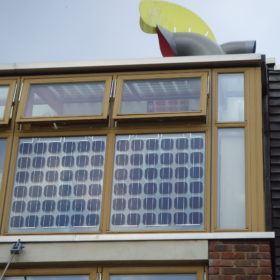
MIT researchers say PV innovations should be deployed in niche markets first
Solar module manufacturers should begin testing new technologies in higher-value niche markets, say scientists at the U.S. institution. For example, bringing perovskite technology directly to the mainstream market remains prohibitive in terms of initial investment but segments such as building-integrated PV or microelectronics devices may offer better routes to commercial maturity.
