
Rethinking silver paste design for TOPCon, LECO solar cells
Researchers in China have developed an evaluation framework to better assess fine-line silver pastes for TOPCon and LECO solar cells. The approach links laboratory characterization directly with production-line performance, addressing the limitations of conventional evaluation methods.
No evidence of PFAS leaching from solar panels, study finds
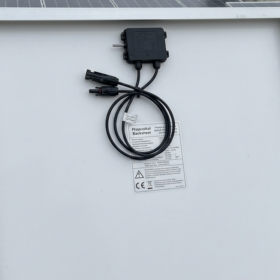
Researchers in the United States reviewed claims about PFAS in solar panels and found that while fluoropolymers may be used in limited components like backsheets or coatings, there is no confirmed evidence of PFAS leaching from commercially deployed modules. The study highlights widespread confusion between different PFAS types and emphasizes the need for clearer communication and transparency around fluoropolymer use in PV technologies.

U.S. startups announce partnership to offer domestic perovskite-silicon tandem solar modules
Solx and Caelux said they will supply 3 GW of Solx Aurora modules, which combine domestic silicon cells from Suniva and a top layer of Caelux “Active Glass” to reach 28% efficiency, with commercial volumes available in the U.S. market by 2027.
Inside PV Manufacturing: United Solar’s polysilicon factory in Oman
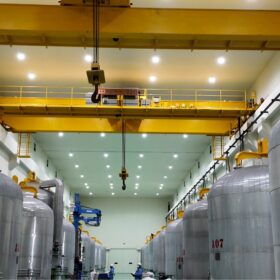
In the first article of a new series on solar manufacturing facilities around the world, pv magazine presents the polysilicon facility of United Solar in Oman. The plant has a production capacity of 100,000 metric tons per year and is currently the largest of its kind outside China.

Fabricating perovskite solar cells with robotic boxes
An international research team has developed an AI-driven robotic platform that autonomously designs, fabricates, and optimizes perovskite solar cells, completing the full experimental workflow in a closed-loop system. Using the platform, the researchers fabricated and tested more than 50,000 devices, achieving efficiencies of up to 27%.
Tandem PV launches commercial perovskite-silicon manufacturing in California
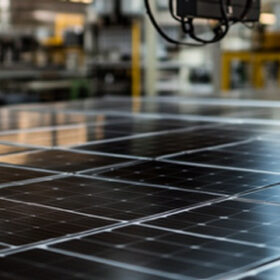
Tandem PV has opened a 40 MW commercial demonstration factory in Fremont, California, marking a significant transition for perovskite-silicon technology from laboratory development to repeatable manufacturing at scale.

JinkoSolar debuts rooftop PV module weighing 7 kg/m2
The Chinese manufacturer said its lightweight Light Diamond TOPCon module delivers 560 W at 24.94% efficiency.

Will we finally buy European PV modules?
In a new monthly column for pv magazine, the Becquerel Institute explains why Europe’s solar manufacturing outlook is shifting from decline to cautious opportunity, driven by rising energy uncertainty and new regulations like the Net-Zero Industry Act that create fragmented, nationally defined markets with partial protection for domestic producers. While demand and policy support are strong, complexity, uneven implementation, and competition risks mean success will depend on how quickly and strategically industry players navigate this narrow window.

Trina Solar TOPCon patents invalidated in US ruling involving Canadian Solar
The U.S. Patent and Trademark Office has invalidated all claims of two TOPCon solar cell patents previously asserted by Trina Solar against Canadian Solar subsidiaries.

Cyber threats for PV: What are supply chain attacks and how do they work
Supply chain attacks compromise PV systems by targeting trusted vendors, software, or hardware components, allowing attackers to infiltrate systems indirectly through legitimate channels. These attacks can disrupt operations, introduce hidden vulnerabilities, and impact multiple assets at once, making vendor security and system validation critical for resilience.
