
Chinese solar production juggernaut rumbles on
Three more PV manufacturers are jostling to announce plans to invest in an expansion of production capacities as the industry appears to make light of coronavirus fears.
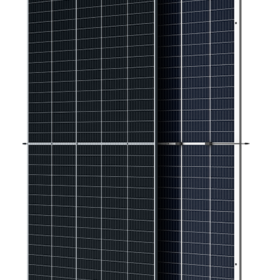
Trina unveils two 500 W bifacial solar modules
The Duomax V and Tallmax V panels are equipped with glass-glass and glass-backsheet frames, respectively. Both offer a reported 21% efficiency and orders will be taken from the second quarter on. Trina plans to have a combined 5 GW of annual production capacity for the products this year.
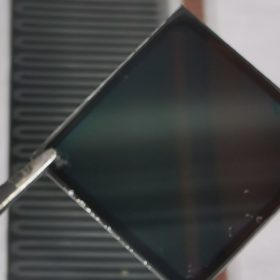
International consortium claims 25% efficiency for perovskite CIGS solar cell
Researchers led by Belgian institute imec claim to have achieved the result with a 1cm² perovskite tandem solar cell. The result tops the 24.6% efficiency the consortium announced in September 2018. The cell’s developers are now aiming for 30%.
REC Group all set to kick off production of Alpha 72 Series module
The Norwegian solar manufacturer is readying the 72-cell version of its Alpha Series heterojunction module for the factory floor.

How FIT cuts killed plans for UK solar manufacturing hub
With the European Commission claiming its €100 billion ‘Just Transition’ fund will ease EU coal mining regions into a post-fossil-fuel future energy system, Adam Smith considers what happened in one deprived area of Britain when government policy failed to support talk of clean energy ambitions.

‘Tesla and Panasonic are scrapping their partnership’ in solar cell production at Buffalo factory
Elon Musk has spoken of an ‘exponential’ ramp-up of its solar glass tile at the facility in New York state. Panasonic’s tiles never made the cut.

Recycling lead-acid batteries for perovskite solar cell manufacturing
Researchers from China are proposing to use spent battery lead for creating a perovskite that can be used in the production of solar cells that are based on this promising material. The proposed one-step process, which was tested in the production of a 17.38% efficient perovskite heterojunction cell, is said to be cheaper and less energy-intensive than other recycling processes for waste lead from lead-acid batteries.

What’s cooking in Eni’s PV lab?
Researchers at the Italian oil group are trying to improve organic photovoltaics and luminescent solar concentrators and a new supercomputer with sophisticated algorithms will help them with the solar energy puzzle.

Chinese solar giant steps in to acquire rival in $250m swoop
Longi Solar has dramatically stepped in to take over fellow Chinese manufacturer Zhejiang Yize New Energy Technology, which operates 7 GW of module production capacity and 3 GW of cell facilities in northern Vietnam.
Module manufacturer responds to rumors of panel failures at 75 MW South African project
Reports of module under-performance at the Mulilo Sonnedix Prieska solar project have prompted a response from South African company Artsolar, one of the module suppliers for the plant. The project is said to be experiencing serious problems due to premature module degradation. Divian Govendar, CEO of Johannesburg-based Artsolar, said the company has not been required to replace any modules at the site.
