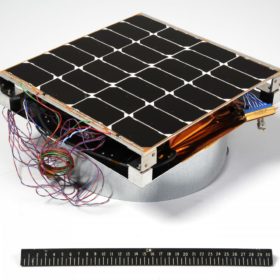
A PV antenna for solar power beaming from space to Earth
Researchers from the U.S. Naval Research Laboratory have launched first orbital experiment with space-based solar power. They have sent into space a 12-inch square tile photovoltaic module that is expected to test the viability of space-based solar power systems converting sunlight to microwaves outside the atmosphere.

Sunny regions could see one-cent solar within a decade
The solar learning curve usually applied to panel costs has been extrapolated to the larger, non-module element of the price of solar electricity generated by big projects, leading one commentator to predict new solar projects could be cheaper than legacy fossil fuel plants within 10-15 years in certain markets.

Chinese PV Industry Brief: 5.5 GW of PV procurement, new dates for SNEC, and a 200 MW project
Datang Group has launched a bidding process to procure 5.5 GW of PV modules and inverters for its own solar projects. The SNEC trade show in Shanghai has set new official dates, after being postponed in early April due to the Covid-19 pandemic. And Topray Solar is seeking to raise funds for a 200 MW solar project in Guangdong province.
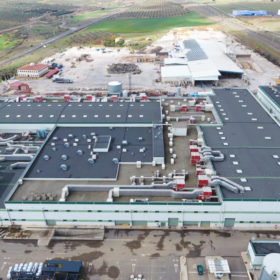
Solar grade silicon production comes back to Spain
Rivas-Vaciamadrid-based company Aurinka is planning to start UMG silicon manufacturing in Puertollano, Castile-La Mancha, this year. The company says its patented low-carbon production process offers low enough manufacturing costs to compete with Asian rivals.

BIPV solar modules with varying transparency
German panel maker Sonnenstromfabrik has developed a glass-glass monocrystalline PV module in three versions offering different levels of transparency. The company says the transparency feature makes the panels suitable for verandas, pergolas, awnings, carports, swimming pools, halls and facades. Their power output varies from 160 W to 280 W, while their efficiency ranges from 9.5% to 16.7%.
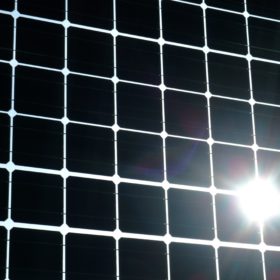
A new concept for heat-recovery solar cells
Researchers in Japan have demonstrated a new concept for a ‘heat-recovery’ solar cell, which they claim has the potential to exceed the theoretical limit for cell efficiency. They say, however, that a suitable material for the energy filtering layers is yet to be identified. The cell is equipped with a 100-micron thick silicon absorber, two electrodes and carrier-energy filtering layers placed between the absorber and electrodes.

Bangladeshi solar installers call for waiver of state loans
Installers which took advantage of cheaply-priced government finance say customers affected by the Covid-19 crisis cannot afford to pay for the solar home systems they have rolled out while expanding renewables programs.
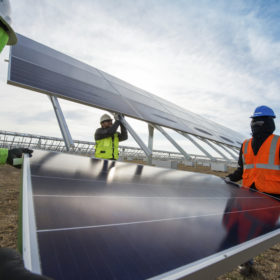
SunPower sells off its O&M business, gets regulatory approval for Maxeon spinoff
SunPower has had to make fundamental changes to continue to be relevant in a solar industry very different from that of its roots. The company aims to become an energy service provider and is leaving low-cost manufacturing to its Chinese partner.

Chinese PV Industry Brief: 3.95 GW of new PV in Q1, new 500 W-plus modules, and a panel with 23.2% efficiency
China’s cumulative installed PV capacity topped 208 GW at the end of March, thanks to 3.95 GW of new projects completed in the first quarter. JinkoSolar and Longi both joined the 500 W-plus module race, with their new panels offering 580 W and 530 W of output, respectively. Ginlong, meanwhile, has revealed plans to raise funds to increase its annual inverter production capacity to 20 GW, and Xi’An Solar has claimed a 23.2% efficiency rate for its N-type TOPCon modules in mass production.
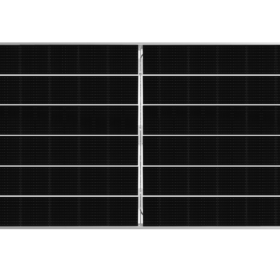
Jinko launches PV module with record output of 580 W
The panel is part of the company’s new Tiger Pro series, which includes two 530 W modules and a 430 W product for distributed-generation applications. It will begin production of the series in the fourth quarter, although it will start accepting first orders immediately.
