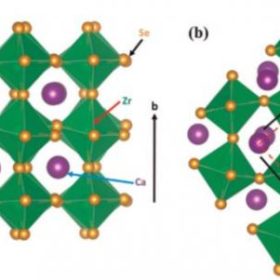
Chalcogenide perovksites for PV energy and waste heat recovery
According to new research, metal chalcogenide perovskites can be used as a thermoelectric material than can convert thermal energy from the sun to usable electric power. These materials, which can also be used to develop perovskite PV cells, are known for their high thermal and aqueous stability, along with their nontoxic elemental composition.
Longi Solar signs 1.2 GW bifacial module deal with Adani
The Chinese module maker will supply Adani Green Energy with 1.2 GW of Hi MO4 bifacial modules, with cell efficiency reaching 22.5% and module power peaking at 430W (72 cells).
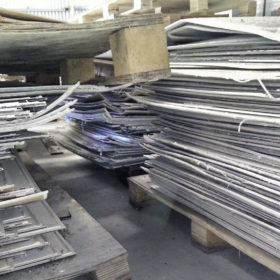
Assessing metal leaching from PV modules dumped in landfill
An Indian research team has analyzed around 300 scientific studies about PV panel waste containing carcinogenic metals. The researchers said solar module recycling is not economically profitable and policy support is necessary to avoid panels being dumped in landfill.

Hanergy-owned Alta Devices reportedly lays off 250 employees without notice
The U.S. business built and sold record-setting gallium-arsenide solar cells but its parent has seemingly run out of patience. Having failed to give its workers notice of the move, Hanergy is either in contravention of U.S. employment law, ‘faltering’ or subject to ‘unforeseen business circumstances’.

Star Wars’ Death Star with PV modules could surpass global energy needs by 10 times
EOn has calculated the number of PV modules that could theoretically be installed on the Imperial space station from the popular film series. It concluded that even a small version of the station would be able to provide enough solar power to supply 2.5 billion households on Earth.
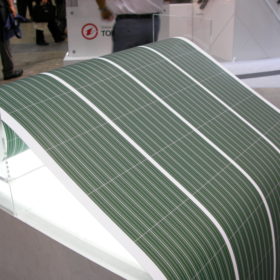
Japanese researchers explain why organic solar cells are damaged by UV light
Scientists have observed that the efficiency of an organic PV device decreases by around 50% when it is exposed to 100-h light irradiation. They attributed this loss to increased resistance of the organic semiconductor layer.
Is it worth increasing cell efficiency? A new metric tells you when
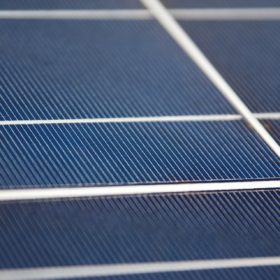
A group of scientists is proposing a new metric – the value of efficiency – to calculate the maximum allowable cost to increase a cell’s efficiency and improve the levelized cost of electricity (LCOE). The researchers expect that more regional diversification may be seen at the global level in the years to come, with the proposed metric offering higher values in North America, Central and Northern Europe, Japan, Australia, and New Zealand.
New sandwich-like material for lead-free perovskite solar cells
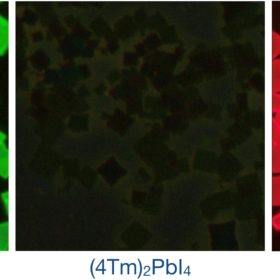
Scientists from Purdue University claim to have created a new material that incorporates both organic and inorganic materials. Its hybrid structure is said to improve the thermal stability of perovskite PV cells without the need to use lead.

Energyra works on restarting PV factory in the Netherlands
The insolvent photovoltaic manufacturer is still talking to potential investment partners, but it claims that it could resume PV module production at its shuttered factory in the Dutch municipality of Zaanstad on short notice.
The ‘butterfly effect’ of Chinese PV listings
A recent study shows that PV costs have declined faster than any other energy technology over the past two decades. The researcher behind the study said this would not have been possible without the “butterfly effect,” which is based on the idea that a small change in one part of a complex system can have a large impact elsewhere. The researcher also attributed the the rapidly declining cost of PV to Chinese manufacturing and strong US investor support.
