IRENA predicts LCOE of solar will drop to $0.01-0.05 by mid century
The latest study published by the International Renewable Energy Agency says the average solar electricity cost of $0.085/kWh produced by projects commissioned last year is set to fall to $0.048 next year, and $0.02-0.08 by 2030.
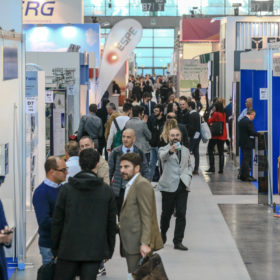
Italy’s struggle to re-join the gigawatt club
Italy’s main solar event, the Key Energy fair held in Rimini, demonstrated the continuing importance of rooftop PV for Italian renewables but also promised a gradual return for large scale solar. Industry insiders are hoping for at least one gigawatt of solar next year, on top of a projected 600 MW this year.

Orderly disorder: Cambridge scientists make surprising perovskite discovery
Researchers have made a finding they say could vastly simplify and reduce the production cost of perovskite solar cells. Working with mixed halide perovskites, the group found a disordered chemical composition can improve device efficiency.
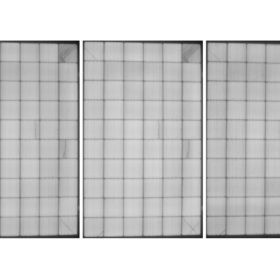
New metallization tech to reduce microcracks in solar cells
A U.S. research group has developed a metal-carbon-nanotube composite – MetZilla – which can be embedded in commercial, screen-printable silver pastes and is said to reduce the formation of hotspots in solar modules and to prolong panel lifespan. The composite metal contacts are also ‘self-healing’ as they are able to regain electrical continuity after cycles of complete electrical failure caused by extreme strain.
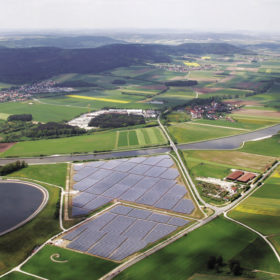
SunPower splits in two
The U.S. company’s transformation from solar manufacturer to the second-largest residential PV company in the nation is complete after it spun off its high-efficiency cell and module production unit into a new entity, in partnership with Chinese wafer maker TZS.
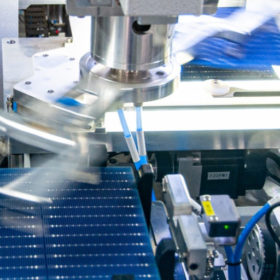
Energetica begins manufacturing at gigafactory in Austria
The module maker has started producing solar modules at its fab in Liebenfels.

New material for radiative cooling of solar panels
Spanish researchers have discovered a material said to offer radiative cooling and self-cleaning of devices which undergo critical heating during operation, such as PV panels. The thermal emitter enabled the scientists to lower the daytime temperature of silicon wafers by 14 degrees Celsius.

Volvo to join blockchain-powered ethical auditing of cobalt supply chain
Corporations in the auto industry, battery manufacturing and mining have joined forces to establish reliable due diligence reporting on raw minerals. Volvo will be among the first to move on the issue by putting its cobalt supply chain under scrutiny early next year.

Industry waits in anticipation of a Green Deal for Europe
Amid high hopes for the European Commission presidency that is about to start, attendees at a recent event in Berlin tempered optimism by renewing calls for an industrial policy for the bloc.
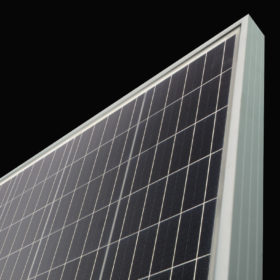
Jinko to add another 5 GW of mono wafer capacity in Leshan
The solar manufacturer’s ever-accelerating production capacity expansion plans currently foresee 10 GW of mono wafers being pumped out at the Sichuan facility every year from the second quarter of 2020 – and only a fool would bet against that timetable being bettered by the time April rolls around.
