
SunPower brings its A game to high efficiency modules
The U.S. manufacturer has rolled out its new A-Series modules as the first product using its NGT solar cells, based on larger wafers and a streamlined manufacturing process. But will it be enough to get SunPower back in black?

Spain’s Genera event dominated by PV as it draws the crowds
Spain’s most important renewable energy fair is becoming increasingly about solar. After a decade of slim pickings, last year’s event promised better times and, if this year’s show didn’t completely deliver, that’s because elections loom large.
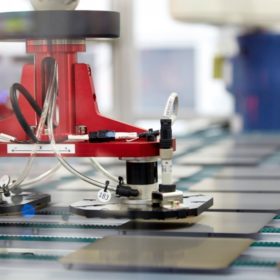
Hanwha Q-Cells sues Jinko, Longi and REC for patent infringement
The Korean solar manufacturer has lodged a patent infringement lawsuit against Jinko and REC in Germany, and two more against the same companies plus Longi in the U.S. Hanwha Q Cells claims its three rivals have used its patented solar cell passivation technology to increase the performance of their products.
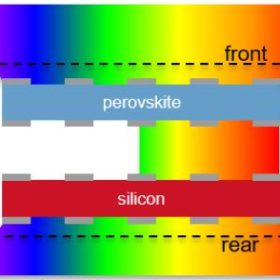
Netherlands’ ECN achieves 30.2% efficiency for bifacial tandem cell based on perovskite
The cell was created by applying a newly developed perovskite cell on top of an industrial bifacial crystalline silicon version. The resulting cell is said to better harvest sunlight, as one unit is optimized for high energy photons and the other absorbs low energy particles.

Hanwha 1.7 GW panel factory is the second US fab to come online this week
Hanwha Q Cells has begun shipping solar panels from its 1.7 GW factory near the Georgia-Tennessee border. The huge facility is the second major U.S. module factory to announce production this week.
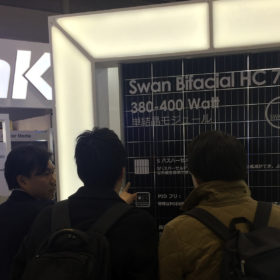
If bifacial panels can compete on price the (backsheet) choice is clear
Jinko Solar has launched a new bifacial solar module, with a clear backsheet manufactured by DuPont, to compete with standard glass-on-glass bifacial products, as well to create markets where bifacial might not have previously fit.

India hits Malaysian solar glass with anti-dumping duty
The Indian government has imposed anti-dumping duty of $114.58/metric ton on tempered solar glass imports originating in or exported from Malaysia. The five-year duty will be applied to products from producers except Xinyi Solar.

Inside JinkoSolar’s US factory
The Chinese manufacturer is ramping the third-largest module factory in the United States, as part of a resurgence in U.S. module manufacturing.
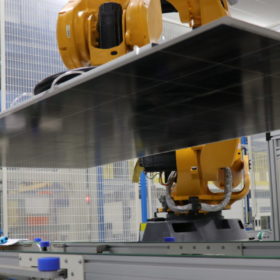
Inside JinkoSolar’s US factory
JinkoSolar is ramping the third-largest module factory in the United States, as part of a resurgence in U.S. module manufacturing.

Hanergy Thin Film shareholders must accept privatization share swap or be left with dead stock
It turns out the cash element of the HK$54.9 billion ‘cash and stock replacement’ plan to privatize Hanergy’s Hong Kong listed thin film division amounts to around HK$0. Thin Film shareholders face a Hobson’s Choice between a convoluted scheme laced with uncertainties or writing off their stock.
