
Ecoprogetti supplies 250 MW production line for Moroccan bifacial module fab
The line, supplied by the Italian PV equipment provider, will produce glass-glass and bifacial modules. Almaden’s factory is expected to begin manufacturing activities in late October.
Module prices have decreased by up to 25% so far this year, TrendForce says
According to the Gold Member Solar Report by EnergyTrend (Q3 2018), monocrystalline module prices have fallen almost 20% this year, while those for polycrystalline modules have dropped by more than 25%. Increased consolidation among manufacturers and developers is expected to occur in China and the global solar market, with more merger deals, plans for capacity reductions and even factory closures.
Solar manufacturing in the Arab region remains difficult, IRENA says
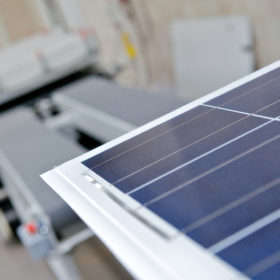
In a study on the potential for local manufacturing of renewable energy equipment in the Arab region, IRENA has assessed how three pilot Arab countries – Lebanon, Jordan and the UAE – where development of clean energy is currently strong, may host PV, CSP and wind energy industries. In all of them, however, there are currently few chances of seeing a rising solar and renewable energy manufacturing industry, due to a series of challenges, such as, among others, the lack of a qualified workforce, and favorable regulatory settings.

TOPCon: The next big thing after PERC
TOPCon technologies could further increase solar cell efficiencies, said Guangyao Jin, chief scientist, DuPont Photovoltaic Solutions, at this year’s Energy Taiwan, held in September. He added that metallization paste is crucial.

Saudi Government refutes claims 200 GW solar project has been scrapped
Responding to recent news reports that Saudi Arabia had abandoned its very ambitious plans to install 200 GW of solar PV by 2030, the country’s Ministry of Energy, Industry and Mineral Resources (MEIM) issued an official statement saying that the plans are still on track. It also outlined three components of a new power sector transformation plan.

Taiwan on track to meet 20 GW goal, upstream turns downstream
EnergyTrend has released a report suggesting that Taiwan is on its track to meet the target of building 20 GW solar PV by 2025. While decreasing module prices makes it easier for investors and stakeholders to achieve this goal, Taiwan’s module manufacturers are struggling to compete with the price developments this year. Many companies in Taiwan will, therefore, turn their eyes to the downstream market, the report claims.

“Optical Tweezers can benefit solar cell research” – Interview
pv magazine interviewed Ricardo Arias González, who holds a PhD in Physical Sciences and introduced the Optical Tweezers applied to biology in Spain. It is one of the tools of photonics for which Arthur Ashkin received the Nobel Prize in Physics in 2018, together with Donna Strickland and Gérard Mourou.

SunPower makes good on its promise to manufacture in America
The high-efficiency PV maker has closed on SolarWorld’s Oregon factory, which will transition from SolarWorld products to SunPower’s P-type shingled modules.
Taiwan’s cell makers: A$44.8 bn loan, new layoffs and falling shares
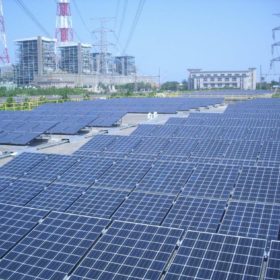
In the latest news emerging from the struggling world of Taiwanese solar cell makers, Motech has announced more layoffs, and a NT$4.8 billion loan; GET has let 203 employees go; and shares of the new UREC merger are said to be down. India’s safeguard tariffs are also hitting the country’s manufacturers hard.

Shunfeng plans sale of manufacturing unit for $683 million
The Chinese company said the transaction will enable a larger deployment of resources for its downstream clean energy business. The potential buyer is Asia Pacific Resources Development Investment Ltd.
