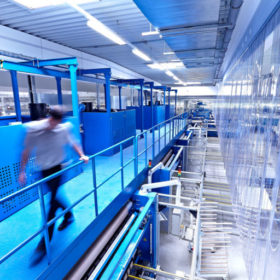
Sonnenstromfabrik plans 300MW solar module line in Germany with patented REC tech
Under a new partnership, Sonnenstromfabrik is expanding its solar module manufacturing operations in Germany with the addition of a new 300MW line. It will use REC Group’s patented split cell and junction box technology in its new PERC products.

Bifacial TOPCon solar cell with 23.84% efficiency, 90% lower silver consumption
Developed by Germany’s Fraunhofer ISE, the cell is manufactured with metallization based on a plating process. The device was built with galvanic nickel/copper/silver contacts instead of common silver contacts.
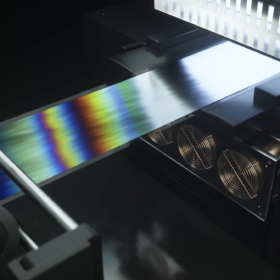
New flexible solar module factory begins operations in the UK
Operated by UK start-up Power Roll, the pilot factory will reach a capacity of 30 MW by year end. The manufacturer uses low-cost roll-to-roll manufacturing processes and patented microgroove patterns to produce flexible solar panels intended for applications on warehouses and agricultural sheds whose roofs are not strong enough for conventional arrays as well as in vehicle-integrated photovoltaics.
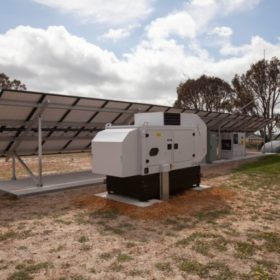
New rules allow distributors to roll out standalone power systems in Australia
The deployment of standalone power systems in Australia’s National Electricity Market is expected to accelerate, as the Australian Energy Market Commission has published new rules allowing distributors to install renewables-based technologies in the nation’s five market jurisdictions.
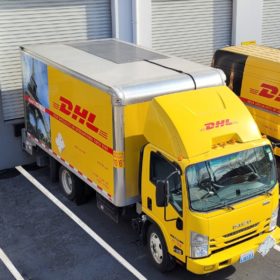
DHL deploys solar in fleet trucks
International express shipper DHL is topping its trucks with solar to limit fuel usage by powering lift gates and ancillary devices.

More than 190,000 plug-in PV systems are now online in Germany
A recent report from HTW Berlin and Verbraucherzentrale NRW reveals that, between 2020 and 2021 alone, around 128.000 new plug-in solar arrays, totaling 51MW of generation capacity, were installed in Germany.
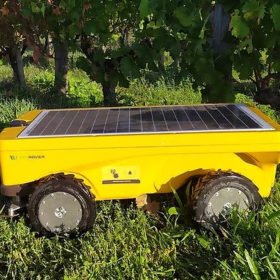
Solar-powered robotic mower for vineyards
Developed by a French start-up, the robotic mower can be used in a 50-unit herd across a property of around 50 hectares and a radius of 20 km. It is powered by polycrystalline cells and equipped with battery storage. The system can operate with a maximum slope of 15% and reach a speed of 300m/h.

The best BIPV envelope design alternatives
Scientists in Australia have developed an optimization framework for building-integrated photovoltaics that allows the selection of design variables according to user preferences. Their model considers PV-related features such as tilt angle, window-to-wall ratio (WWR), PV placement, and PV product type, as well as objective functions and constraints such as the net present value and the payback period.
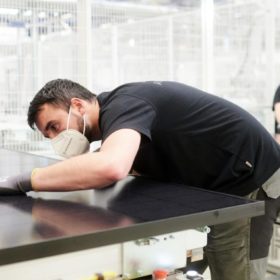
EU leading PV technology innovation, plans for 100GW solar manufacturing capacity by 2030
Plans to reestablish a thriving European solar manufacturing base are underway. As part of the UP Initiative’s upcoming Q2 2022 theme on the topic, pv magazine spoke to Johan Lindahl, secretary general of the European Solar Manufacturing Council to understand the challenges and opportunities for domestic manufacturers, and to discover how they could reach the target of forming a full 100GW solar value chain by 2030.
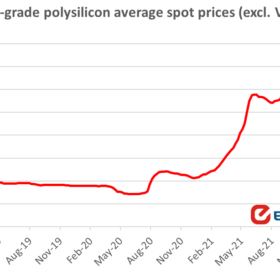
Polysilicon price fluctuations expected to continue until late 2023
Two industry experts have provided analyses of the current polysilicon price scenario in a chat with pv magazine and both agreed that polysilicon demand is still growing faster than supply. The price may decrease starting from the second quarter and reach more reasonable levels by the end of the year.
