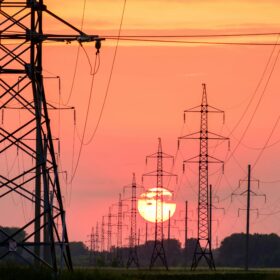
Empowering the Energy Transition: New IEA-PVPS Task 19 Sets the Stage for Global PV Grid Integration Collaboration
The new IEA-PVPS Task 19, succeeding Task 14, aims at fostering sustainable PV grid integration and invites experts from diverse countries, disciplines, and organizations to join its ambitious projects, with the aim of reshaping the future of electric power networks and positioning PV as a dominant force within evolving power systems.
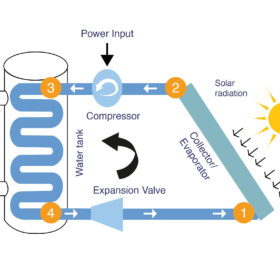
New solar-air dual-source heat pump design based on blower fans
Scientists have utilized two blower fans with two roll-bonded bare plates to create a heat pump that can operate in variety of ambient temperature and solar radiation conditions. The system has an average daily coefficient of performance of 3.24.
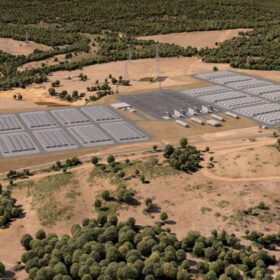
Synergy secures planning approval for 2 GWh big battery
Australian utility Synergy has secured approval for its plan to build a 500 MW/2,000 MWh battery energy storage system in Western Australia.
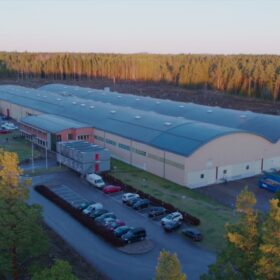
Swedish battery maker Nilar files for insolvency
Nilar, a Swedish producer of nickel metal hydride batteries, has filed for insolvency and is now looking for a new owner.
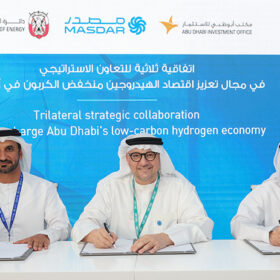
The Hydrogen Stream: Masdar signs more hydrogen deals at COP28
Masdar unveiled a 10 GW Africa Growth Plan for renewable investments in six Sub-Saharan Nations at COP28 in Dubai this week, in addition to signing four additional hydrogen deals.
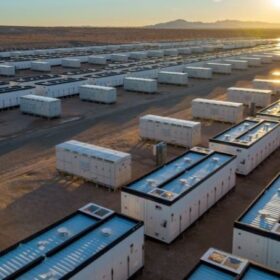
Canadian Solar to supply 1.7 GWh of batteries for UK storage project
Canadian Solar says its majority-owned subsidiary, CSI Solar Co., will supply 1.7 GWh (DC) of e-STORAGE batteries to an under-construction energy storage facility in Coalburn, Scotland.

Australian town to host 200 MW/1,600 MWh compressed air storage facility
Canada’s Hydrostor has struck a deal to provide backup power to a remote town in the Australian state of New South Wales by using a compressed air energy storage plant that will be built in an underground cavern at one of the region’s closed mines.
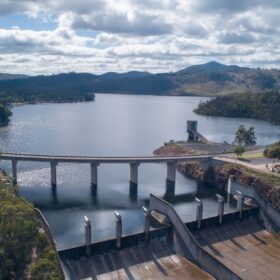
EnergyAustralia pushes forward with 335 MW pumped hydro project
EnergyAustralia has released the concept design for a 335 MW pumped hydro energy storage and generation project it plans to develop at Lake Lyell, in the Australian state of New South Wales.
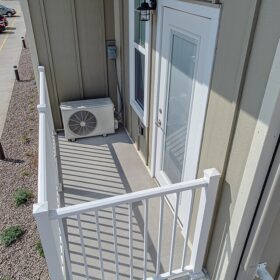
Four ways heat pumps can assist the world’s energy transition
From using heat pumps in decommissioned power plants, to utilizing them for storage and carbon capture – scientists from China have listed the ways in which heat pumps can help the global energy transition move forward. They showed that their potential is beyond heat electrification.
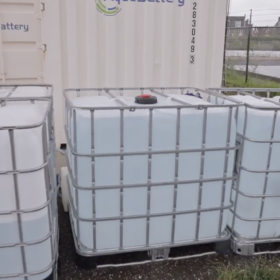
Statkraft looks into long-duration energy storage based on saltwater
Statkraft, a Norwegian energy company, is investigating the scalability and commercial viability of Aquabattery’s technology. It will finance a pilot project for between six and 12 months in the Netherlands.
