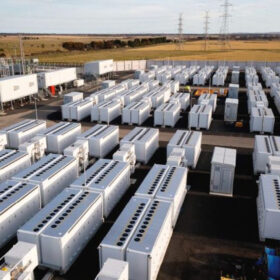
Transformer shortages: New bottleneck of the energy storage supply chain
Transformer shortages are taking their toll on battery energy storage system (BESS) integrators, as competition in the market intensifies.
Lhyfe expanding hydrogen production with focus on offshore wind
Jérémy Langon, head of energy sourcing and site development for Lhyfe, tells pv magazine that the France-based hydrogen producer is focusing on a combination of renewable sources, including offshore wind, to scale up hydrogen production.
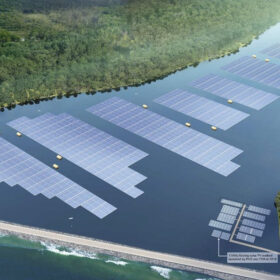
The ‘next big thing’
The PV industry in Southeast Asia has come a long way since guest author Ragna Schmidt-Haupt, partner at Everoze, reported on solar financing innovation in the region more than a decade ago. In this article, she outlines five factors for success, the newest of which has the potential to become a game changer, and not only in Southeast Asia.
The Hydrogen Stream: Malaysia, Singapore mulling hydrogen pipeline
City Energy and Gentari have agreed to study the feasibility of building a hydrogen pipeline from Malaysia to Singapore.
Co-location, co-location, co-location
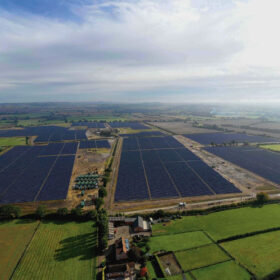
Charles Lesser, who leads UK operations at Apricum, and Apricum Project Manager Alexandra Popova explain why the renewables consultancy is predicting a big rise in solar-plus-storage projects in Great Britain.
Brazilian regulator opens consultations on storage integration
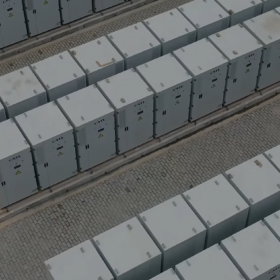
Aneel, the Brazilian energy regulator, has launched a plan to implement new storage provisions in three phases. It has also defined storage resources and services to be provided this year and has outlined new rules for pumped hydro facilities in 2024.
Reliance begins trials of swappable EV batteries
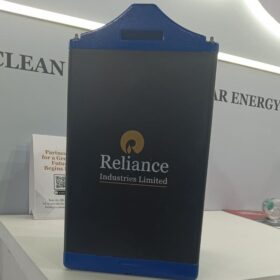
Reliance Industries recently showcased its swappable lithium iron phosphate (LFP) batteries for electric two-wheelers. The batteries can be charged through the grid or with solar to run home appliances.
Peak Energy to set up domestic market for sodium-ion batteries
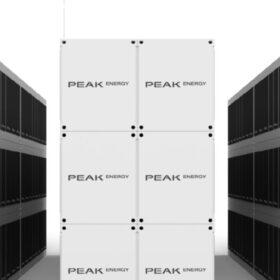
Sodium-ion energy storage system manufacturer, Peak Energy, is working to streamline what it believes is the biggest bottleneck to scaling enough battery energy storage systems to accommodate 80% renewable energy generation and 100% carbon-free electricity in the United States by 2035.
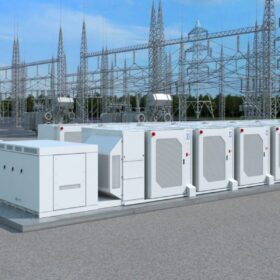
Israeli regulator approves regulatory framework for storage
Israel’s planning administration has approved the terms for deploying up to 16 MWh of storage facilities. The government said that due to the Gaza conflict, storage has become ever more important for emergencies.
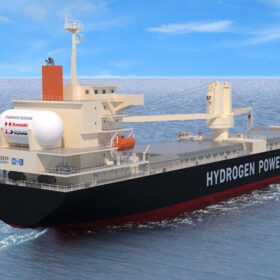
The Hydrogen Stream: Japan invests in hydrogen
Nippon Kaiji Kyokai (ClassNK) has approved a hydrogen-powered multi-purpose vessel in Japan, while Toyota has decided to use fuel cell coaches for transport during the 2024 Paris Olympic Games.
