
Senec remotely switches off its residential batteries after explosion in Germany
The German battery manufacturer said this week its residential storage systems were automatically switched to a regulated stand-by mode in Germany. The background to the remote shutdown is three reports of explosions in houses in which Senec products were installed.

European battery manufacturers unhappy with eco-design and recycling proposals
Industry body Recharge says it would be absurd if the makers of small batteries were required by law to collect and recycle products the size of shipping containers, and claim a requirement individual battery cells be replaceable will pose a safety risk.

The Hydrogen Stream: Ukraine invasion raises price of gas-powered grey ammonia
With fears over Europe’s gas supply tightening, the Australian government is forging ahead in the green hydrogen sector by launching tech incubator HyGate and awarding Volt Advisory Group cash to develop a renewable energy microgrid. Australian business Fortescue Future Industries and Europe’s Airbus will work on hydrogen-powered aircraft and Kawasaki Heavy Industries is making strides in transporting hydrogen from the state of Victoria.

Indian green hydrogen will cost $5/kg
Ratings agency ICRA has estimated Indian green hydrogen will cost that much if produced at sites featuring clean energy generation capacity and electrolyzers. That is between 50 US cents and a dollar per kilogram cheaper than in locations where the two systems are not co-located, with the saving possible due to a reduction in open-access, intra-state grid charges.

Floating solar project and a battery manufacturing co-op among nine projects funded in Australian coal country
The government of the state of Victoria will fund a floating PV array and an initiative to locally manufacture solar batteries and install a portable renewable energy system for community services during emergencies, as part of its Latrobe Valley program.
IHS Markit: Battery prices won’t fall until 2024
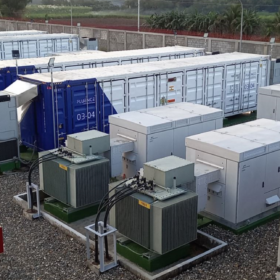
The London-based analyst has published a series of clean tech predictions for the year which also highlighted the rising proportion of sub-5MW solar projects in the global market, and cheaper clean energy financing costs even as panel prices continue to rise.
Scatec joins scaled up Omani green ammonia project
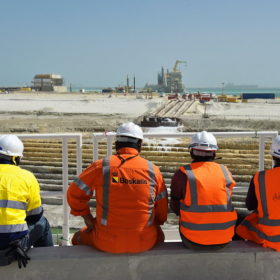
A previous announcement by Acme indicated the port site would be able to produce around 876,000 tons of the green fuel per year but the Indian developer today said that figure would be 1.2 million tons. The 100,000-ton-per-year first phase of the facility may be operational this year.
Hybridizing PV, redox flow batteries and geothermal heat pumps
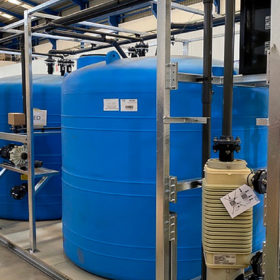
A Spanish consortium is equipping one of Madrid’s largest metro and bus stations with a hybrid system that combines PV, geothermal pumps, and vanadium redox flow batteries to provide cooling and heating.
Australian researchers announce lithium-sulfur battery breakthrough
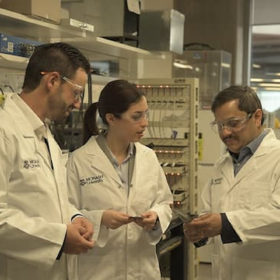
Researchers from Australia’s Monash University have created a new generation of lithium-sulfur batteries to provide a cheaper, cleaner and faster-charging energy storage solution that outlasts lithium-ion alternatives and is rechargeable hundreds of times without failing.
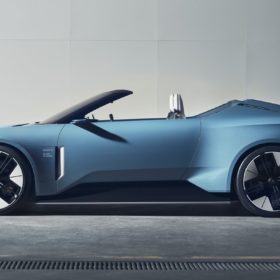
The mobility rEVolution: An electric car integrating an autonomous cinematic drone
Developed by Swedish manufacturer Polestar, the hard-top convertible incorporates a drone that can be launched from its dock behind the rear seats whilst driving to capture footage of the journey. In other news, Sony and Honda tie-up to make electric vehicles, Ford splits gas-powered and EV businesses, Stellantis unveils a strategic plan to reach net-zero by 2038, and Tesla offers free supercharging near Ukraine. Panasonic has also unveiled plans for two new production facilities for its large-format cylindrical battery cells.
