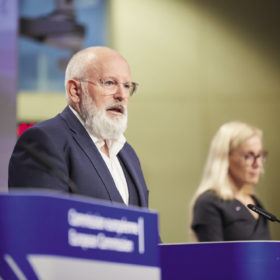
European Commission proposes minimum sustainability thresholds for batteries
The world’s second largest battery market is mulling strict regulation of what type of products can be sold within it. The bloc wants to tighten rules on using hazardous materials and would encourage circular economy approaches. The scope of the commission’s proposal would also affect the design of devices, with phones, laptops and other portable gadgets without removable batteries set to be prohibited.
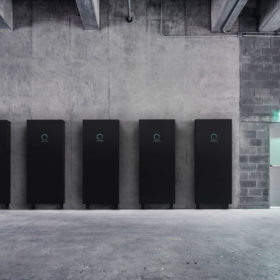
Growing German storage market buoyed by falling prices
RWTH Aachen University and Forschungszentrum Jülich evaluated the data. It shows a growing demand for photovoltaic storage systems in 2019 and continued positive market sentiment lasting well into 2020.
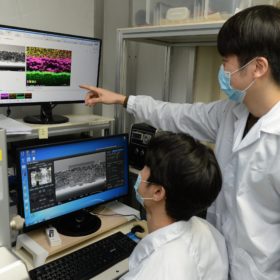
New approach to solid-state battery design
Scientists in South Korea developed a new electrode structure for a solid-state battery which they say could lead to both higher energy densities and simplified manufacturing processes for this promising energy storage technology.

UK assembles experimental hydrogen network from decommissioned gas infrastructure
The £12.7 million project will explore how to transport pure and blended hydrogen for use in heating and industrial purposes. Construction will start next year.
IRENA raises carbon price issue in green hydrogen policy guide
Guide to drawing up national green hydrogen strategies acknowledges the global hydrogen economy could fail to take shape if any of the world’s powers decide to stick with fossil fuels to gain a price advantage.
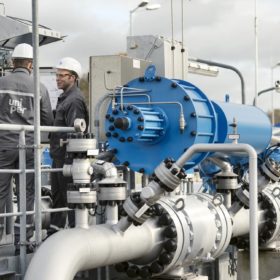
Europe could double ambition of its hydrogen strategy – white paper
Big brands will have to put their money where there mouth is on carbon commitments, though, and the EU will have to put its shoulder to the wheel, particularly in respect of the commonly-heard call to dispense with red tape. The prize could be a call for 280 GW more renewables capacity by 2030.
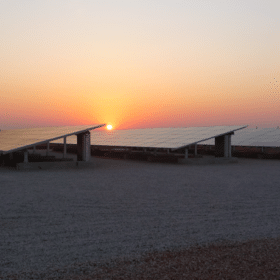
Horizon looks to future with green hydrogen microgrid
Western Australian utility Horizon Power will build the nation’s first remote microgrid using renewable hydrogen generation at Denham, in the state’s northwest, having secured the support of the Australian Renewable Energy Agency (ARENA).
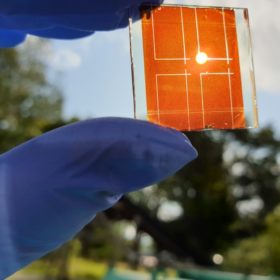
India and Israel to work together on perovskite solar cells and lithium sulfur batteries
Low-cost batteries and novel perovskite materials are among the topics selected for joint research and development.
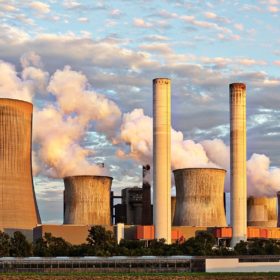
‘China renewables will hit grid parity with new-build coal next year’
Analyst WoodMac says South Korea, Thailand and Vietnam will also join India and Australia next year, among the nations where clean energy projects are cheaper than new coal power plants.
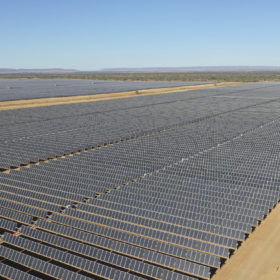
Enel plans to drive 120 GW of renewables capacity by 2030
The Italian energy business plans to spend €70 billion on clean energy this decade and also announced plans to invest in e-mobility and grid flexibility, in concert with outside investors.
