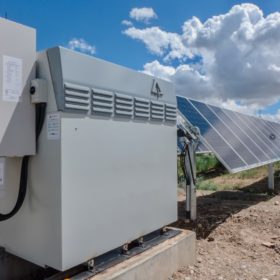
A redox flow battery for MW-sized solar-plus-storage
Matt Harper, chief commercial officer of newly-merged British-Canadian vanadium redox flow battery business Invinity Energy Systems has spoken to pv magazine about the VS3-022 Battery Unit it is marketing for grid scale solar-plus-storage projects and why it may be a better bet than lithium-ion.

Is deep-sea mining eco-friendlier than land-based mining?
The International Seabed Authority will change regulations for deep-sea mining this year. The ocean floor is covered with potato-sized pebbles containing high levels of cobalt, manganese, nickel and copper – materials that could soon be in short supply as the energy transition progresses.

Covid-19 weekly briefing: A cold wind for APAC renewables, respite for Indian developers and another salary cut for SunPower execs
The coronavirus epidemic continues to batter the global economy, including the solar industry, but falling demand during lockdowns has brought negative energy prices as well as helping drive record solar generation, amid less-polluted skies.
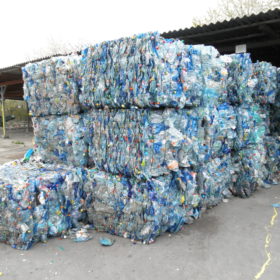
Instant battery electrodes – just two minutes in the microwave
Scientists in the United States have used microwaves to convert ubiquitous plastic packaging material polyethylene terephthalate into a battery electrode component. The researchers say anodes based on the material could be suitable for both lithium-ion and sodium-ion devices.
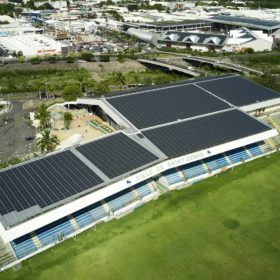
La Réunion stadium hosts 1.25 MW/1.33 MWh of solar-plus-storage
The project was selected in a tender for storage deployment in non mainland grid interconnected areas that was finalized by France’s Energy Regulatory Commission in 2016.

Europe can be 60% powered by solar before 2050
Perhaps it is not surprising a report co-produced by Europe’s solar industry places PV at the heart of a zero-carbon, mid-century energy system on the continent. However, the study does flesh out two out of three scenarios in which becoming carbon-neutral by 2050, or even 2040, could be possible.
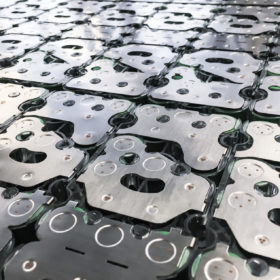
Manz to partially resume operations after Easter
The PV production equipment manufacturer said its employees will return to work at to two locations in Germany as planned after the Easter break, despite concerns about the Covid-19 pandemic.
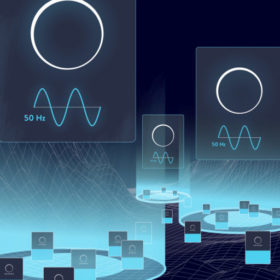
Software for virtual power plants powered by residential solar-plus-storage
With its sonnenVPP, German battery company Sonnen wants to improve the efficiency of virtual power plants which it says can offer primary balancing energy from houses with solar and storage and can operate up to 90% more cost-effectively.
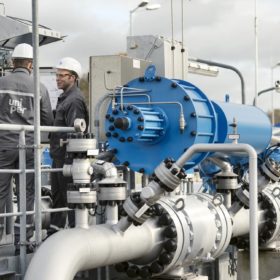
Bringing green hydrogen to market
German companies Uniper and Siemens will cooperate on joint projects to advance the use of green hydrogen and sector coupling. Conventional, gas-fired hydrogen production plants will be gradually transformed as part of the initiative.

Australian researchers enhance clean hydrogen electrolysis
Griffith University scientists have unlocked a catalytic process to enhance the breakdown of water into hydrogen and oxygen and bring Australia a step nearer clean, efficient hydrogen fuel.
