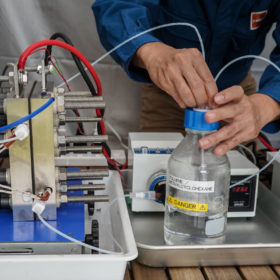
Queensland sends first green hydrogen shipment to Japan
Green hydrogen has been exported from Australia to Japan, under a trial executed by researchers from JXTG, Japan’s largest petroleum conglomerate, using Queensland University of Technology’s cutting-edge Redlands Research Facility. The Queensland government has also announced AUD 250,000 ($177,000) in funding toward the establishment of a renewable hydrogen production pilot plant.
Australian government unveils $35.7m pot to power remote communities
Australia’s Coalition government has announced funding to support up to 50 off-grid and fringe-of-grid feasibility studies that will investigate whether building a microgrid is cost-effective and whether existing off-grid capabilities can be upgraded with more up-to-date technology.
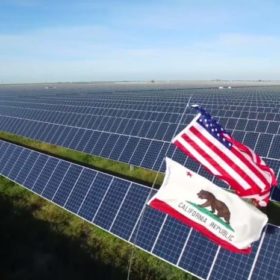
Big batteries are coming to California
Macquarie has closed on funding for a third portion of a 340 MWh project in Southern California, and LADWP is planning 1.8 GW of batteries.
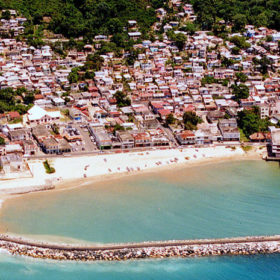
Puerto Rico to officially go 100% renewable
Senate Bill 1121 has been given final approval by the Puerto Rico legislature and is headed to the desk of Governor Ricardo Rosselló. When passed, it will make the island the fifth U.S. state-level jurisdiction to establish a 100% zero-carbon and/or renewable energy mandate.
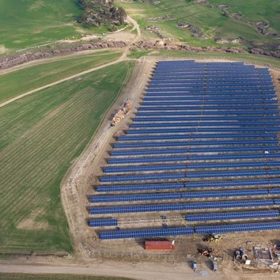
Cyprus set to install its first battery storage and blockchain systems
The University of Cyprus announced plans a few years ago to build a solar PV farm in the United Nations buffer zone in the capital city of Nicosia. The project is finally coming to fruition, but with two additional elements: battery storage and testing for a blockchain system.
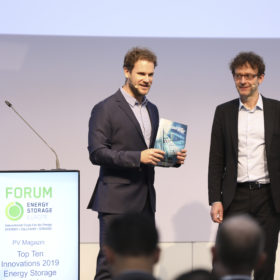
Video: Energy Storage Europe
Energy Storage Europe was held in Düsseldorf from March 12-14. Our editors checked out all the latest technologies at the exhibition. Watch as they review new products and discuss the future of power-to-gas technology.
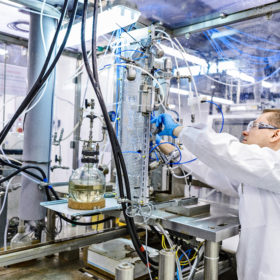
LCOE for li-ion batteries has fallen to $187/MWh — BNEF
Lithium-ion batteries are increasingly posing a competitive threat to coal- and gas-fired generating plants when paired with solar and wind projects in a number of markets throughout the world, without the need for subsidies, according to new research by BloombergNEF (BNEF).
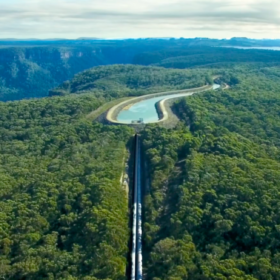
Pumped hydro to triple Australia’s storage capacity
A new study from the Australian National University shows that a series of pumped storage projects currently in the pipeline across five states could triple Australia’s storage capacity and pave the way for more solar and wind.
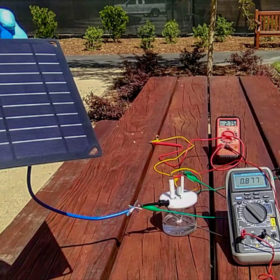
Water, water everywhere, nor any drop to… split?
Researchers at Stanford University have developed a type of electrode which is highly resistant to salt corrosion, therefore allowing them to produce hydrogen using seawater. Applied at a larger scale, this development could potentially cut the cost of power-to-gas applications by greatly increasing the amount of water available.
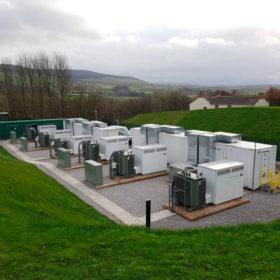
NEC ES completes 18 MW, 7.5 MWh storage project for EKZ in Switzerland
NEC Energy Solutions has finished installing an 18 MW, 7.5 MWh grid storage system (GSS) in Switzerland for Elektrizitätswerke des Kantons Zürich.
