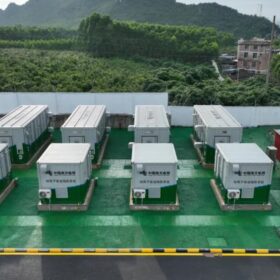
China switches on first large-scale sodium-ion battery
China Southern Power Grid has deployed a 10 MWh sodium-ion battery in China’s Guangxi Zhuang region. It is the first phase of a 100 MWh project.
Faulty installations often to blame for battery fires
The Electric Power Research Institute (EPRI), the US Department of Energy’s Pacific Northwest National Laboratory (PNNL), and German battery analysis specialist Twaice have jointly evaluated 26 battery fires between 2018 and 2023. They say that the diversity of components plays a critical role in igniting fires.
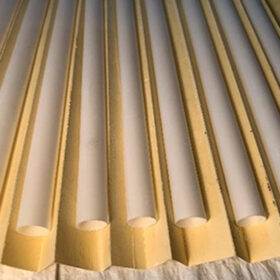
Australian startup, EDF team up to test electrolzyer tech
A startup spun out of the Australian Commonwealth Scientific and Industrial Research Organisation (CSIRO) has secured a grant to build a 5 kW electrolyzer that will be deployed at a UK power plant operated by French energy utility EDF.
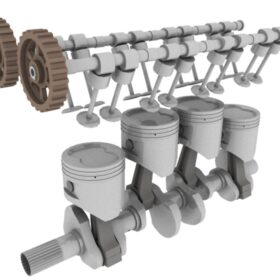
Improving LCOE of PV-driven hydrogen via reciprocating engines
UNSW scientists have suggested to use dual-fuel reciprocating engines for adding gas-to-power operations in large scale production of hydrogen based on PV power. The preliminary findings of their research show that the proposed system is still achieving a too high LCOE for commercial maturity. Decreasing electrolyzer costs, policy interventions and changing energy market dynamics, however, may more than halve the LCOE values in the future.
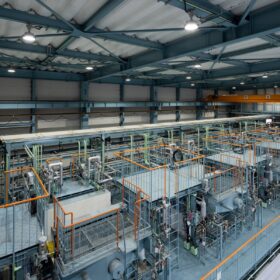
The Hydrogen Stream: Asahi Kasei to test alkaline water electrolyzer
Japan’s Asahi Kasei is testing a new alkaline water electrolyzer, while China has started developing its first 100 kg vehicle-mounted liquid hydrogen system.

Spain’s storage deployments hit 495 MWh in 2023
According to new data from trade body UNEF, Spain reached 1.823 MWh of cumulative storage capacity at the end of December 2023.
German PV system prices down by over 4% since November
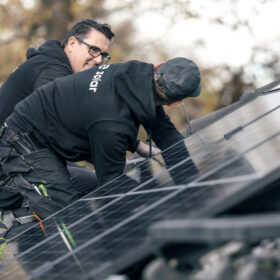
The Selfmade Energy online platform says that prices for PV systems and battery storage systems fell by more than 4% between November 2023 and March 2024. In March, for example, 6 kW PV systems without batteries were sold for between €1.66 ($1.79)/W and €2.10/W.
Key takeaways from World Hydrogen 2024 in Rotterdam
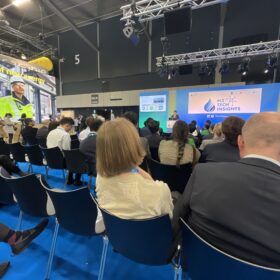
Development of green hydrogen production in Europe is moving forward in fits and starts, but the ongoing World Hydrogen 2024 event in Rotterdam calls for blue hydrogen adoption, which suggests that the oil and gas industry aims to maintain control of the hydrogen market.
‘We must push back on net billing’
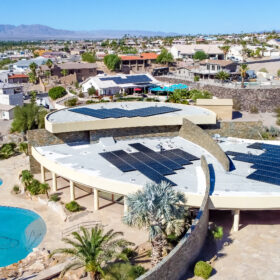
With California’s NEM 3.0 legislation having gutted panel sales and Arizona heading a bevy of other US states preparing to reduce solar-export payments, it’s time the United States solar industry stepped up, for ourselves as well as our customers.

Techno-economic feasibility of hydrogen storage in hydro-dominated countries
Scientists have investigated different techno-economic scenarios for using hydrogen storage in combination with hydropower and pumped hydro storage in Switzerland. They have found that hydrogen storage plays no major role under most conditions.
