
India launches 2.4 GW of renewables tenders
Solar Energy Corp. of India (SECI) has kicked off 2.4 GW of renewables tenders, including a 1.2 GW procurement exercise and a 1.2 GW round.
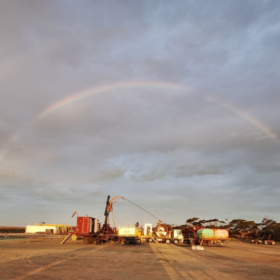
Australian hydrogen developer hits purity high in testing
Natural hydrogen explorer Gold Hydrogen says it has uncovered 95.8% pure hydrogen at its Ramsay Project on South Australia’s Yorke Peninsula as it seeks to tap into growing demand for the gas as a clean energy source.

Poland’s new capacity market auction could hamper storage deployment
The draft parameters for this year’s capacity market auction in Poland could make the rollout of battery energy storage systems (BESS) much more difficult. The document proposes a significant reduction to the BESS derating factor that could be particularly harmful for longer duration storage systems.

The Hydrogen Stream: Japanese scientists develop proton-conducting perovskites for fuel cells
Scientists from the Tokyo Institute of Technology (Tokyo Tech) and High Energy Accelerator Research Organization (KEK) have developed a highly oxygen-deficient perovskite for protonic ceramic fuel cells (PCFCs), while the European Commission has approved its fourth Important Project of Common European Interest (IPCEI).
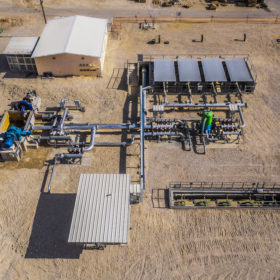
Long-duration energy storage poised to outcompete lithium-ion batteries
While most long-duration energy storage (LDES) technologies are still early-stage and costly compared to lithium-ion batteries, some have already or are set to achieve lower costs for longer durations, finds BloombergNEF.
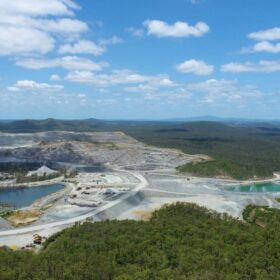
Australian miner pushes ahead with 20 GWh pumped hydro project
Evolution Mining is moving forward on a AUD 7 billion ($4.64 billion) plan to build a 2 GW/20 GWh pumped hydro electricity generation facility in the pit of a 20-year-old gold mine in Australia.
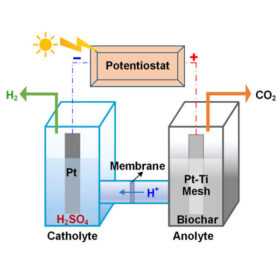
Producing hydrogen fuel from solar power and agricultural waste
Using 600% less voltage to produce hydrogen, a research team at the University of Illinois Chicago has developed a new method for splitting water.
Apricus Generation buys stake in Nexus Renewables
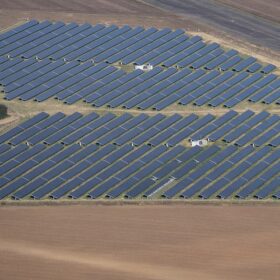
US-headquartered Apricus Generation says it has acquired a controlling stake in Toronto-based Nexus Renewables – its first strategic acquisition.
Clean Power Hydrogen launches membraneless electrolyzers
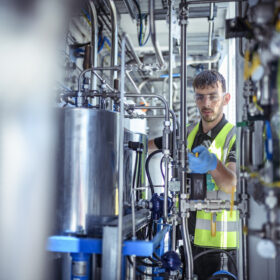
Clean Power Hydrogen (CPH2) is launching membraneless electrolyzers with cryogenic systems to separate hydrogen and oxygen. It is producing them in the United Kingdom and is collaborating with other companies for production in Germany and New Zealand. It says it expects 4 GW of combined production capacity by 2030.
Japanese researchers unveil solar chemical heat pump system for buildings
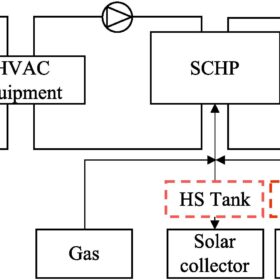
The novel heat pump concept combines solar energy with chemical storage and reportedly consume 75% less electricity than conventional heat pumps. The system relies on a battery and a heat storage tank that can be used either separately or simultaneously, depending on the outdoor conditions.
