
Singyes finally publishes details of last year’s annus horribilis
The collapse in business for the solar EPC provider after last year’s 5/31 policy announcement by Beijing has left the company’s future depending on the progress of a Chinese state bail-out. Provided that is, the business does not end up being wound up by Deutsche Bank first.

Solargiga issues profit warning
The manufacturer has been unable to get its new mono ingot and wafer making facilities up to full speed and says the delay in confirming Beijing’s new solar policy this year also affected its bottom line.

Rooftop PV has reached grid parity in main EU markets
Researchers have developed a high-resolution geospatial method of assessing the solar potential of all buildings in the EU and concluded rooftop PV could provide a quarter of the bloc’s electricity needs. The scientists say grid parity for rooftop solar has been reached outside eastern member states with cheap fossil fuel electricity.

Algerian diesel-solar tender concludes with lowest bid of 11 cents
State-owned gas and power provider Sonegalz intends to develop five hybrid projects in off-grid areas in the south of the country. The highest bid came in at the equivalent of $0.13/kWh.
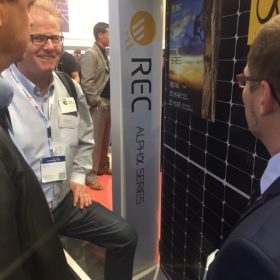
Meyer Burger abandons plan to relocate operations to China
The Swiss equipment maker is instead preparing to commit its future to PV in its European heartland and will start with plans to help Norwegian module maker REC Solar embark on a gigawatt-scale production expansion.

China Power’s Hong Kong business on track for return to China
The High Court has approved plans for the Chinese state-owned power company to reassume control of its Hong Kong-listed solar project development business.
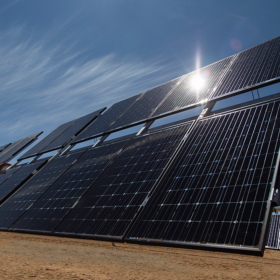
Power deal signed for 230 MW solar plant in Chile
Atlas Renewable Energies has agreed to provide the Chilean unit of French energy giant Engie with 550 GWh annually for 15 years. The electricity will be supplied by the Sol del Desierto project Atlas is building in northern Chile.

Commercial solar at grid parity in China but a hard line is needed on soft costs
Deploying commercial and industrial PV in China without subsidy is already profitable in some areas, according to a new study, but prohibitive soft costs and cheap electricity are the main barriers for such installations in areas where grid parity remains out of reach.
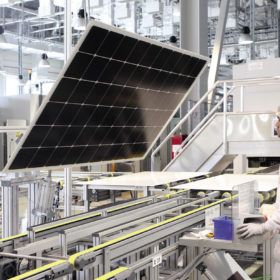
Thinktank says India must prioritize a vertically integrated solar supply chain
To develop cost-competitive solar modules the nation must adopt a phased program and set up 15 GW of silicon-ingot-to-solar-module manufacturing capacity by 2024, according to The Energy and Resources Institute.

The tide is changing for ground-mounted PV in Ireland
Ireland appears ready to embrace PV after years of failed announcements. Globaldata predicts the EU member state will deploy around 1.3 GW of solar by 2030, with renewables potentially meeting 65% of electricity demand. Furthermore, Irish Water has announced it wants to deploy solar at its water treatment plants.
