
EU moves to restrict funding for projects using inverters from high-risk suppliers
The EU is moving forward with a plan to restrict funding for PV projects using inverters from high-risk suppliers, citing cybersecurity concerns and issuing new guidance to phase them out. A transition period applies for certain projects linked to the EU grid, while others must exclude such suppliers by 2027.
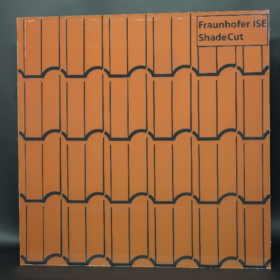
Fraunhofer ISE develops colored film tech for patterned solar modules
Scientists at Fraunhofer Institute for Solar Energy Systems ISE have created a film-based system that applies color patterns and cutouts to PV modules using the institute’s MorphoColor technology, enabling modules to imitate roof tiles, masonry, and facades with around 5% efficiency loss.
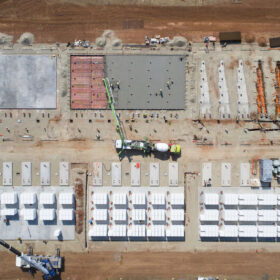
Long-duration battery storage can contribute to security of supply more cost-effectively than gas-fired power plants, LCP Delta finds
LCP Delta has conducted a study analyzing the potential contribution of long-duration battery storage to security of supply within capacity tenders in Germany, including an economic comparison with gas-fired power plants and the resulting costs to the public. However, the authors explicitly note that they are not advocating for a complete phase-out of new gas-fired power plants.
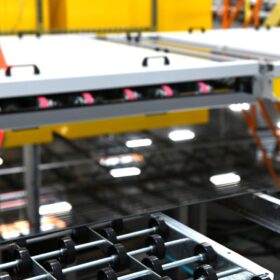
Manufacturing partnership brings new PV technology to U.S.-sourced solar
Solx’s Aurora hybrid module with Caelux’s perovskite glass aims to compete on performance beyond federal tax sunsets.
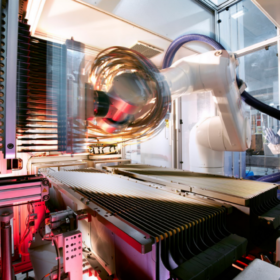
Trina Solar, JA Solar, JinkoSolar launch China’s first PV patent pool for TOPCon technologies
China’s solar industry has launched its first TOPCon-focused patent pool, led by Trina Solar, JA Solar, and JinkoSolar, to streamline licensing, reduce disputes, and strengthen IP coordination at home and abroad.

Sun’s out, load’s gone: The evolution of Australia’s National Electricity Market
Q4 2025 in South Australia saw grid-connected loads with spot price exposure actually being paid to use electricity about half the time (46%) – and that electricity was overwhelmingly (80%) supplied by renewables. This demonstrates a shift from managing demand to quietly needing it. Particularly in regions like South Australia, there is growing demand for demand.
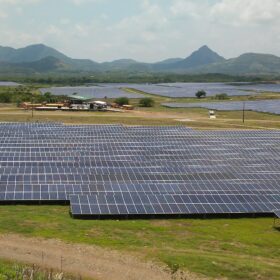
Solar delivers where wind and hydro falter
UK-based consultancy Ricardo, part of the WSP Group, explains how solar PV has compounded at 17% annually since 2016, defining the EU’s clean-energy trajectory. However, straightforward merchant returns are disappearing, and battery storage and grid expertise are now essential.
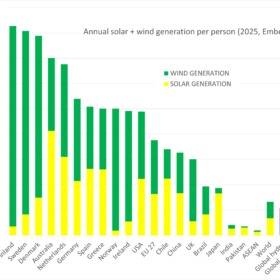
Solar and wind take over global power growth in 2025
In 2025, solar and wind dominated global energy growth, delivering around six times more new capacity than all other power sources combined and supplying nearly all new electricity demand. With rapid expansion led by countries like Australia and several European nations, solar and wind are now the fastest-growing and central drivers of the global energy transition.

Inside PV Manufacturing: Belga Solar’s module factory in Belgium
In the latest article of a new series on solar manufacturing facilities around the world, pv magazine presents Belga Solar’s solar manufacturing facility in Wallonia, Belgium.

Dutch buildings could host 36 GW of façade solar capacity
A new report from the Netherlands Enterprise Agency (RVO) estimates that building façades could offer up to 36 GW of technical solar PV potential, representing a significant but largely untapped resource. However, high costs, regulatory complexity, and lower performance compared to rooftop systems limit widespread adoption, currently making façade PV a niche solution for specific building types.
