The weekend read: C&I challenges and innovations
In the jargon-heavy world of solar-speak, C&I handily condenses Commercial and Industrial into a snackable sub-section of the PV industry. But as sub-sections go, the C&I space has perhaps the greatest scope for flexibility, offering a raft of possibilities from ground-mount through to ingenious use of rooftop space. For module manufacturers, C&I also means something else: Challenges and Innovations, writes Ian Clover, Manager Corporate Communications, Hanwha Q Cells.

The future is mono: An interview with Longi President Zhenguo Li
In this interview with pv magazine, the president of integrated monocrystalline PV maker Longi Solar gives his perspective on market and policy changes in China, Europe and the United States, as well as giving an update on his company’s very rapid growth.
Bifacial PV and tracking: Q&A with JinkoSolar
On October 25, pv magazine will host a webinar, powered by JinkoSolar, in which the China-based manufacturer will present the case for using bifacial modules in large-scale solar plants, and discuss the influencing factors and their impact on bifacial PV tracking. In the following Q&A, JinkoSolar’s Andrea Viaro, Head of Technical Service Europe, JinkoSolar, and Colin Caufield, VP of Sales North America, Soltec provide a sneak peak into the technology and the advantages tracking can bring to bifacial technology.
India to add up to 8.5 GW of RE in FY19
India is likely to add between 8-8.5 GW of renewable energy generation capacity in the current financial year ending March 2019, according to research and rating agency ICRA Limited.
2035: The renewable energy tipping point
The tipping point, where the world shifts from oil and gas to renewables, will be the year 2035, says Wood Mackenzie. This is when renewables and electric-based technologies converge, with around 20% of global power needs being met by solar or wind, and roughly 20% of miles traveled by cars, trucks, buses and bikes using electricity. Will the transition come soon enough, however?
Deloitte sees renewable energy in the fast lane
Solar PV and wind energy are now evolving from established to the preferred energy sources, according to a recent Deloitte study analyzing the global renewable energy market.
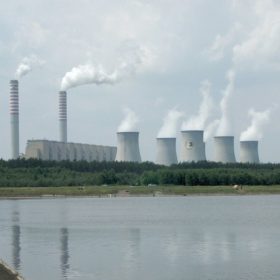
Solar, not coal, can stop hike in electricity prices in Poland
Polish research institute IEO released a new analysis showing increasing power prices in the Eastern European country, due to the current energy policy, which still strongly relies on coal power. Replacing coal with solar power, it argues, would likely result in decreasing power prices.
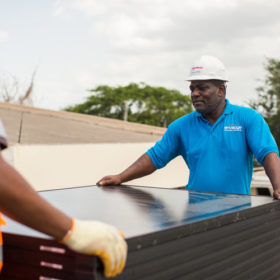
Jamaica’s prime minister calls for 50% renewables by 2030
Jamaica is currently targeting a 30% share of renewables in its energy mix by 2030. However, the nation’s prime minister says, “We can do better.”
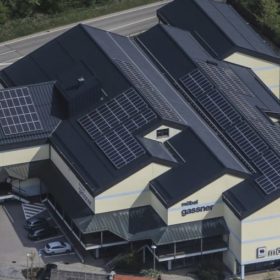
WWF says 2% of Germany’s surface is enough for 100% renewables
An analysis of the World Wildlife Fund (WWF) assumes that a maximum of 2.5% of Germany’s land is needed for the energy transition. With a higher share of solar in the electricity mix, however, this percentage would be lowered to 2%. The study also says that the expansion of renewables will not endanger nature protection.
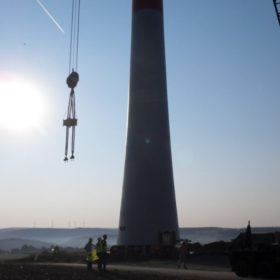
Digital Energy Solutions wins tender for 2.19 MWh of storage in Germany
The Munich-based company will receive up to €2 million for a large-scale storage facility in southern Germany. The system will consist of 52 lithium-ion car batteries –which are also used in the BMW i3 – and will be coupled with a wind farm.
