
Solar glass: European PV module manufacturers fear being “taken hostage”
Currently, new anti-dumping proceedings against solar glass makers from Malaysia are taking place in the EU. Imports of Chinese solar glass have been subject to high anti-subsidy and anti-dumping duties since 2014. The European module manufacturers fear further massive competitive disadvantages and the danger of an Interfloat monopoly in Europe.
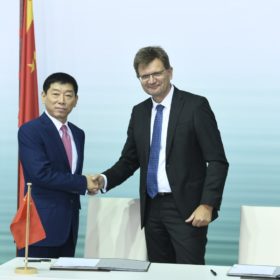
BMW, Tesla open factories in China, driving EV market in spite of trade-dispute
In the wake of the U.S.-China trade dispute, the Chinese government has loosened its policy on ownership caps for factory sites for foreign car brands. Previously, car companies could only retain 50% of the ownership of a factory and had to set up a joint venture with a Chinese partner. By setting up shop in China, Tesla can avoid import duties on its cars, to cater to a broader customer base.
Spain covers 45.8% of H1 2018 electricity demand with renewables
Spain’s electricity grid operator, Red Eléctrica de España (REE) has announced that the country’s mainland covered almost half of its electricity demand in the first half of 2018 with renewable energies alone.
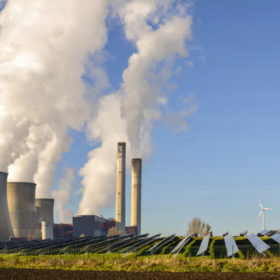
Germany: Renewables beat coal for the first time
According to numbers released by German association BDEW, in the first half of the 2018, renewables contributed 36.3% to gross electricity generation, while PV increased its share to 7.3%. Furthermore, the association said that the market-driven, phased exit from coal-fired power generation is already in full swing.
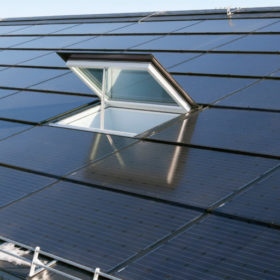
Switzerland close to hitting 2 GW solar mark
According to new numbers provided by Swissolar, Switzerland’s solar market saw a 9% drop in new PV installations in 2017. Demand for PV installations up to 30 kW, however, remained strong.

US proposes 10% tariffs on inverters, AC modules, non-lithium batteries from China
As the trade war escalates, PV inverters, solar panels with attached microinverters and battery storage products other than those which utilize lithium-ion chemistry, may be the latest victims.
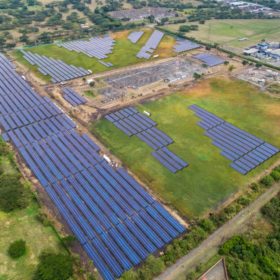
LatAm PV markets see increasing use of green bonds
Colombia’s Celsia is issuing green bonds worth US$145 million to finance its large solar PV project pipeline, while U.K.-based Faro Energy is resorting to clean energy bonds to fund its distributed generation (DG) solar projects across Brazil.

Chad unveils plans for giant solar park
The project, the capacity of which could range between 200-400 MW, is being planned by Dubai-based Almaden Emirates Fortune Power LLC, a joint venture of holding investment company, Emirates Fortune Group and Chinese solar manufacturer, Almaden. If built, the facility will more than double the country’s current power generation capacity, and help reduce energy poverty.
Solar corporate funding rises 15% YoY with $5.3 billion in H1 2018 – Mercom
Despite the uncertainty caused by U.S. solar panel import tariffs, deteriorating trade relations between the U.S. and China, and the looming consequences of China’s PV policy change, the solar industry saw a 15% YoY increase in corporate funding in the first half of 2018, on the back of a Q2 rebound, finds the latest Mercom Capital report.
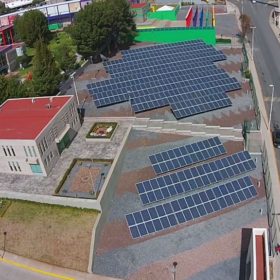
Mexican utility CFE retires protection measures against solar net metering
Without the threat of a hostile attitude from the state-owned power provider, the Mexican distributed generation (DG) market may now continue to be a strong driver of growth in the northern American country.
