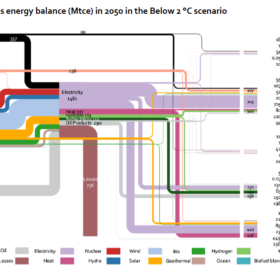
CREO 2018: A new era in the Chinese energy transition
A new era in the Chinese energy transition is on the menu and renewables are the order of the day, according to the latest China Renewable Energy Outlook (CREO). China will not require a gas bridge between coal and renewables, it finds, adding that renewables will become the core of the nation’s energy system by 2050, with annual PV installs of between 80-160 GW possible. Not only that, but electricity supply could be cheaper in this future than it is today.

Zola receives $32.5 million for expansion in Tanzania
Zola Electric has received financial backing worth $32.5 million from social investment firm Symbiotics and the Dutch development bank FMO. The lending facility will be used to grow Zola’s operations in Tanzania over the following five years.
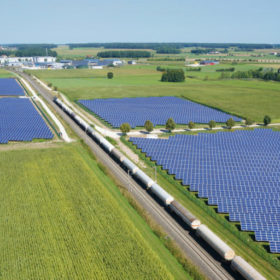
Renewables to account for 38% of Germany’s 2018 gross electricity consumption
The figure released by German industry associations BDEW and ZSW shows that no technology has grown as much as solar PV. Indeed, they say production increased 18% year-on-year. Overall, wind energy remains the largest producer of renewables, with annual growth of 7% over 2017.
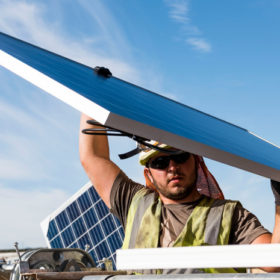
US: Tariffs bite Q3 solar market
Wood Mackenzie and SEIA’s latest Solar Market Insight report shows a big fall in utility-scale project completions from July through the end of September, but the promise of a massive fourth quarter.

EnerGaïa: Solar will be main pillar of France’s energy transition
The French renewable energy fair confirmed the central role of solar in the country’s energy transition. Despite the current difficult political situation, the event attracted more visitor and exhibitor numbers than ever. Read on to discover the four key takeaways from this year’s EnerGaïa.
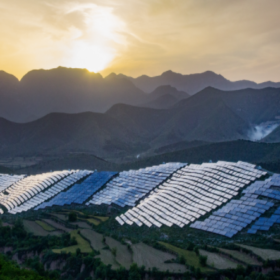
New renewable funding mechanisms higlighted for China – report
In light of the massive Renewable Energy Development Fund deficit, China is looking for new ways to support the further deployment of renewables. German Energy Agency, Dena has prepared a new report, detailing how the country can move away from FITs to a more sustainable financing framework. Overall, it points to the increasing importance of auctions; and discusses how the right policy design can improve the cost competitiveness of renewable energies.
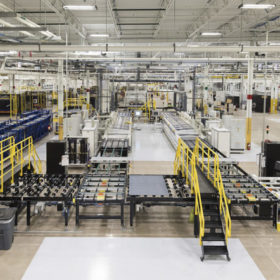
First Solar sees a doubling coming in 2019
The thin film PV maker projects 5.4 to 5.6 GW of module shipments next year, more than double its current projected 2018 volumes of 2.6 to 2.7 GW.
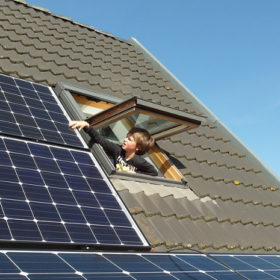
Room for US residential solar to reach 41 GW by 2025
A new analysis by Credit Suisse forecasts that installed residential solar capacity in the United States could grow more than 3x to reach 41 GW by 2025, and shows that there is plenty of space on rooftops to do this.
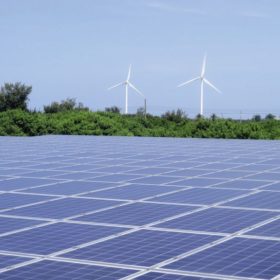
Obscured policies in Taiwan’s FIT scheme to impact on sustainable development of local solar supply chain
The Taiwanese Ministry of Economic Affairs (MOEA) has announced a 10.17% decrease to next year’s feed-in tariff (FIT) rates for solar PV installations, which is much higher than the average decrease of 4.25% in the global PV industry. This will make 2019 a tough year for Taiwan’s PV industry, with wider-than-expected impacts on the whole market.

ADB invests $155 million in Thai green bonds
The bank continues its involvement in Thailands largest IPP B.Grimm, which is set to grow its renewable energy portfolio. According to ADB, the green bond proceeds will go to nine operational solar PV plants with a cumulative rating of 67.7 MW, and 30.8 MW that are currently still under construction.
