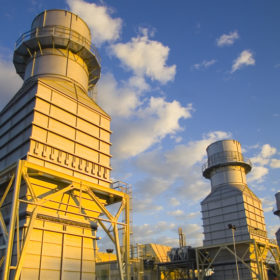
US: Rush to gas risks hundreds of billions in stranded assets
A new report by Rocky Mountain Institute finds that gas plants proposed across the United States over the next 15 years could be replaced by clean energy portfolios at a net savings, and that these projects are at risk of becoming stranded assets.
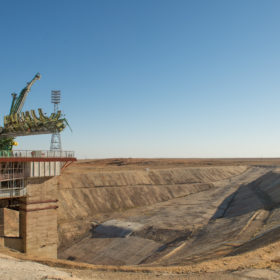
EBRD arranges financing for 50 MW project in Kazakhstan
The European Bank for Reconstruction and Development (EBRD) has announced it will work alongside the Clean Technology Fund and Asian Development Bank to provide a loan for the construction of a 50 MW solar power plant in Kazakhstan’s central Baikonur region.

Are the big Chinese powerhouses coming to America?
In the face of actual and threatened tariffs in the US and India, the world’s biggest solar manufacturers may have to set up shop in the protectionist nations in question ahead of a predicted cooling in their home market.
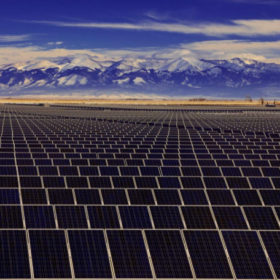
The unstoppable tide of solar illustrated by the rise of floating projects
Price deflation and technological innovation are helping solar transform the global electricity sector. A new report by IEEFA highlights the latest solar milestones around the world and charts important trends including the rise of floating solar and the corporate PPAs helping the tech giants ‘green’ their energy-hungry data centres.

India may miss solar PV target, says CEO survey
The country will achieve solar PV capacity of 50 to 75 GW by 2022 – a little over 60% of the 100 GW target. Total rooftop capacity will be less than 10 GW.
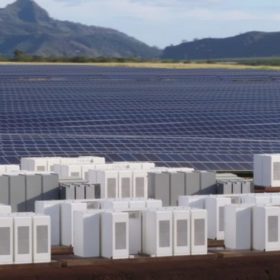
Solar, wind will drive the value of energy storage in the US
A much heralded report shows solar and wind will lower wholesale prices, but it also shows a coming evolution in the pricing profile of the grid. These shifts in timing, shape, regularity and length will drive energy storage demand.
Turkey introduces tax exemption for solar up to 10 kW
Although the promised new provisions for net metering are not in force yet, the Turkish government has prepared the ground for future development by granting residential projects under the upcoming scheme an exemption from the 5% income tax on excess power delivered to the grid.

By 2030, EVs could outnumber the total vehicles in India today
To smoothen this transition, the country needs to build fast solar PV-powered charging stations. In 2017, there were only 220-250 operational charging stations in India, compared to 56,000 petrol stations.
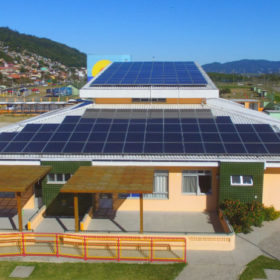
Brazil now has 250 MW of solar under net metering
According to data from Brazilian association ABSOLAR, Brazil currently has 27,803 solar PV systems connected to the grid, which benefit 32,924 consumer units and total more than BRL 1.9 billion (around $515 million) in accumulated investments since 2012.

Water-stressed countries should resort to solar, World Resources Institute says
Unlike traditional power generation, wind and solar require zero, or a mimimum amount of, water for the operations of their respective technologies. This may help most Middle Eastern and North African countries solve their chronich water supply issues, as well as several more African, Asian, American and European countries.
