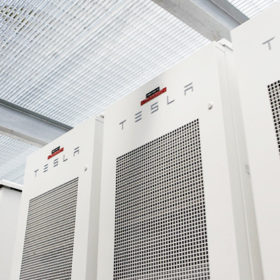
Another grid-scale battery heads to South Australia
A 25 MW / 52 MWh Tesla energy storage system will be installed at the Lake Bonney Wind Farm, in a state which already houses the world’s largest battery.
ET Solar joins forces with cash-rich rival to drive exports
With a wave of consolidation predicted, the module manufacturer has announced a strategic partnership which will see it open up its overseas sales network and scale to smaller peer Tunghsu Kangtu.

GCL-Poly issues profit warning
GCL-Poly Energy Holdings Ltd expects profits for the six months ended June 30, 2018, to drop between 60 and 70%, down from the around RMB 1.2 billion (US$173.6 million) it earned in the previous year.

China to file WTO complaint against US duties
According to China’s Ministry of Commerce, the 30% import duties on Chinese PV products do not comply with the World Trade Organisation’s rules. The Chinese government added that its solar industry could be seriously damaged.
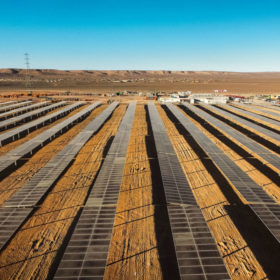
Peru introduces net metering, new DG rules for RE up to 10 MW
The Peruvian Government has submitted to public consultation the draft of Supreme Decree for the regulation of distributed generation (DG), which is the secondary legislation necessary to implement the DG law first promulgated in 2015. Talking to pv magazine, the president of the Society of Peruvian Renewable Energy explains how the new rules will not only introduce a net-billing scheme for installations up to 200 kW, but also a scheme for projects up to 10 MW, which is very similar to the so-called Pequeños Distributed Generation Media (PMGD) program in Chile.
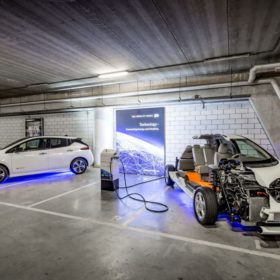
How EVs will transform our grids, or the death of the combustion engine
The driving force behind the innovative energy storage system installed at Amsterdam’s John Cruiff ArenA in the Netherlands, The Mobility House (TMH), talks to pv magazine about the death of the combustion engine, and how electric vehicles (EVs) are presenting both strong business cases, and unparalleled levels of flexibility via decentralized intelligence – blockchain technology – for electricity grids around the world.
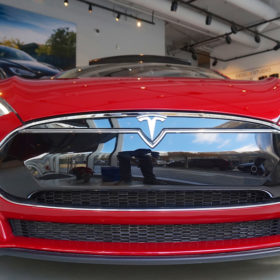
Saudis may take Tesla private
Elon Musk has revealed that a Saudi sovereign wealth fund has approached him with a definite offer, and has announced advisors as the company forms a special committee.

Increased shipments, falling revenues for Canadian Solar in Q2
Module manufacturing giant Canadian Solar shipped 1.7 GW of modules in the second quarter of 2018, a 23.7% increase on the previous quarter, according to the company’s latest update. Net revenue, however, fell more than 50% quarter-on-quarter with the company blaming fewer project sales and lower module prices.

PV business pushes up Manz sales
In the first half of the year, the PV equipment manufacturer recorded a significant increase in sales. This was largely due to orders from the solar industry.
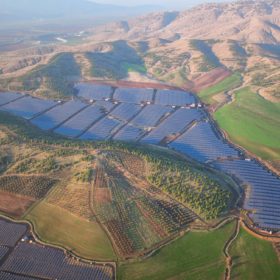
Mixed reaction from solar industry to plunging Turkish currency
As the lira’s troubles continued to weigh on the markets today, it remained unclear how the country’s solar market will be affected. While the plunging currency fosters uncertainty – public enemy number one for investors – it could also create conditions for lower system costs and cheaper PV projects. Nevertheless, a serious slow-down for 2018 must be considered.
