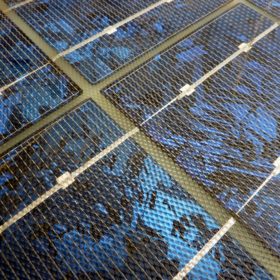
Solar cell prices decline in reaction to safeguard duties, impending MIP decision
“Significant” price movements in solar PV cells has been observed this week, in reaction to India’s safeguard duties, and the impending MIP decision, says EnergyTrend. Module, wafer and polysilicon prices, however, remain stable. In contrast, prices for li-ion batteries are set to increase by as much as 15% in Q3.

Brazil’s PV capacity tops 1.6 GW
At the end of June 2018, according to official statistics, large-scale solar capacity reached 1,307 MW, while the share of distributed PV generation (up to 5 MW), was 296 MW. Of the total capacity, 1.36 GW was connected to the grid in the last 12 months.
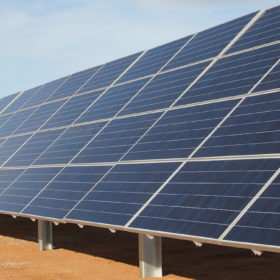
SunPower borrows $110 million to refinance
The PV manufacturer plans to pay off the high-interest ‘mezzanine loan’ with revenue from its residential lease portfolio.

Hanwha Q Cells reports lower revenue, swings to loss in Q2
At US$518.4 million, the quarterly turnover of the South Korean-German manufacturer was down 10.3% year-on-year, while its net result swung from a profit of $18.7 million in the second quarter of 2017, to a loss of $41.3 million in the latest quarter. Despite this, the outlook for full fiscal 2018 remains unchanged.

Meyer Burger posts positive earnings for first half of 2018
The solar manufacturing equipment maker has posted an EBIT of US$15 million for the six-month period. It marks a return to profitability for the Swiss company, after major restructuring and cost optimization programs over the past 18 months.

Nissan Brazil and Federal University of Santa Catarina to cooperate on second-life EV battery research
As the global EV market grows, manufacturers are seeking new revenue streams for used EV batteries. Applications in grid and residential storage systems have become popular. The market for second-life EV batteries is expected to reach $4.2 billion by 2025.
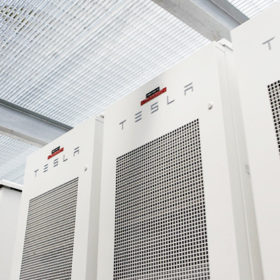
Another grid-scale battery heads to South Australia
A 25 MW / 52 MWh Tesla energy storage system will be installed at the Lake Bonney Wind Farm, in a state which already houses the world’s largest battery.
ET Solar joins forces with cash-rich rival to drive exports
With a wave of consolidation predicted, the module manufacturer has announced a strategic partnership which will see it open up its overseas sales network and scale to smaller peer Tunghsu Kangtu.

GCL-Poly issues profit warning
GCL-Poly Energy Holdings Ltd expects profits for the six months ended June 30, 2018, to drop between 60 and 70%, down from the around RMB 1.2 billion (US$173.6 million) it earned in the previous year.

China to file WTO complaint against US duties
According to China’s Ministry of Commerce, the 30% import duties on Chinese PV products do not comply with the World Trade Organisation’s rules. The Chinese government added that its solar industry could be seriously damaged.
