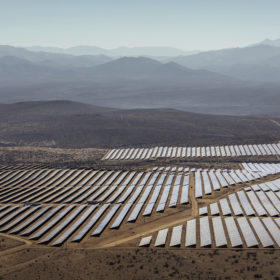
IEA low-balls solar growth (again)
The agency’s base case expects relatively flat growth in solar deployment over the next six years, but for solar to still dominate growth among renewable technologies. The agency’s estimates are again below those of major market analysts.
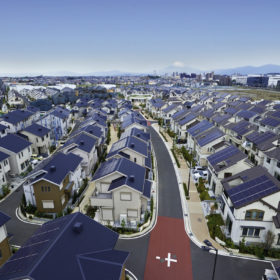
Japan to add 17 GW of new solar by the end of 2020 – Fitch
The additonal capacity is expected to come from the backlog of projects under Japan’s FIT mechanism and would raise cumulative installations to over 65 GW. In the period 2021-2027, however, the industry is expected to grow at a considerably lower pace, due to grid constraints, land availability and lower prices coming from auctions.
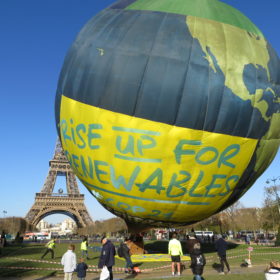
World reacts to IPCC report
A snapshot of how politicians, scientists, institutions, industry, and civil servants have reacted to the Intergovernmental Panel on Climate Change (IPCC) report, released yesterday.

Egypt could reach 44 GW of solar by 2030 – IRENA
In its report, Renewable Energy Outlook: Egypt, the International Renewable Energy Agency (IRENA) envisages a scenario in which solar becomes the second largest energy source in the country, after gas. If current plans and RE strategies are maintained, however, just 9 GW will be installed by 2030, compared 44 GW. The agency recommends a series of actions to achieve a 2030 renewable energy target of 52%.
Module prices have decreased by up to 25% so far this year, TrendForce says
According to the Gold Member Solar Report by EnergyTrend (Q3 2018), monocrystalline module prices have fallen almost 20% this year, while those for polycrystalline modules have dropped by more than 25%. Increased consolidation among manufacturers and developers is expected to occur in China and the global solar market, with more merger deals, plans for capacity reductions and even factory closures.
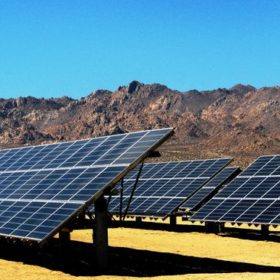
IPCC: 1.5°C limit needs rapid and far-reaching action, but enables SDG progress
The Intergovernmental Panel on Climate Change (IPCC) has released a new report on different ways global warming can be kept within the 1.5°C limit. The panel seeks to inform policymakers before the upcoming COP24 in Poland this December. Resulting from their analysis, the 91 authors state that drastic action and significant investments are needed. Such climate action across all sectors would have significant positive effects on sustainable development progress, they say.

Kosovo raises 2020 solar target, slightly
The Kosovar Ministry of Economic Development has recently announced a plan to transfer 100 MW to 120 MW of licenses from hydro, to solar and wind. The latter, however, is expected to comprise the largest share, according to the country’s revised plans for renewables and energy, which envisage just 30 MW of solar by the end of 2020.

A renewable world order
In the first in a series of interviews on the topic of renewable energy and geopolitics, Indra Overland, head of the Center for Energy Research (NUPI) and Member of the Research Panel, Global Commission on the Geopolitics of the Energy Transition at IRENA, discusses the effects a greater penetration of solar, and other renewable energies, in the global energy mix, could have on world order. Although fossil fuels will continue to play a dominant role in the coming years, sooner or later the geopolitics of energy will cease to be that of gas and oil, according to Overland. Although it is still difficult to predict future scenarios, he believes renewables have the potential to make nations more energy independent, and provide the basis for more peace and stability.
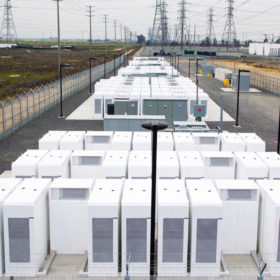
Nevada, US primed for up to a gigawatt of energy storage
A report by the Brattle Group for Nevada regulators suggests that by 2030 – depending on pricing – 700 to 1,000 MW / 2.8 to 4 GWh worth of energy storage could be cost-effectively deployed statewide.
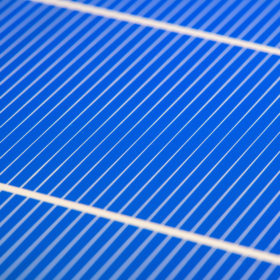
TOPCon: The next big thing after PERC
TOPCon technologies could further increase solar cell efficiencies, said Guangyao Jin, chief scientist, DuPont Photovoltaic Solutions, at this year’s Energy Taiwan, held in September. He added that metallization paste is crucial.
