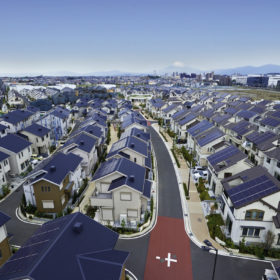
Japan’s PV sector should focus on future energy mix target — report
The Japanese PV industry should respond to the government’s recent decision to leave its 2030 energy mix targets unchanged by pushing for a higher share of solar in the next version of the country’s strategic energy plan, according to a new report.

China sets up International Investment Alliance for Renewable Energy
Although the Chinese government has recently scaled back solar energy development, it has created a new, large, alliance to reach more foreign markets. In addition to focusing on the shipment of PV modules, it will also address financing, EPC and O&M services.
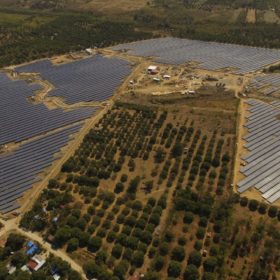
Philippine utility Meralco receives Southeast Asia’s lowest solar bid
In a tender for 50 MW of solar, local PV module manufacturer and project developer, Solar Philippines submitted a bid of P2.34 (US$0.044) per kWh.
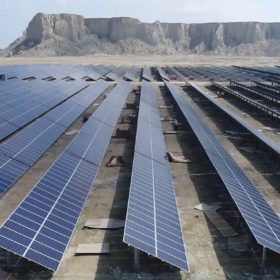
5 GW of renewable plans hang in the balance following reenaction of Iranian sanctions
As U.S. President Trump re-imposed sanctions on Iran, many solar companies – predominantly from Europe – were in the process of developing massive project pipelines in the country. These are now in jeopardy, even with blocking statute imposed by the EU. Those seeking to pursue plans demand safe financial channels from the EU in order to continue developing PV projects, and to signal a clear commitment to the Iran Nuclear Deal.

US: EIA forecasts modest, uneven solar market growth in 2019
The organization’s short-term energy outlook forecasts that 10.3 GW-AC of solar will be installed in 2019, a 7% growth from 2018 – but for 60% of this solar to come online in December.
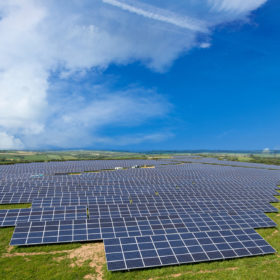
PV demand, changing auctions and price declines – GTM lays out its latest predictions
An uptick in global PV demand will occur in 2020, with China’s 30.5 policy directly affecting 2018’s results by around 18%, says GTM Research. Rapidly falling module prices will benefit predominantly Asian markets, where modules comprise the lion’s share of capex, although regions like Europe will see increased installations. Laying out 10 PV predictions, it anticipates, among others, intensified competition, lower bid prices, more technology neutral auctions and an increasing amount of subsidy free solar.
Australian states harden stance on unambitious national policy as energy bodies take opposing sides
As the debate heats up before Friday’s meeting between federal, state, territory and local government energy ministers in Australia, the Victoria authority has issued a last-minute call to redraft the proposed National Energy Guarantee, and the Australian Capital Territory has redefined its NEG approval condition with regard to the emissions target. Meanwhile, Australia’s energy bodies have taken separate paths.

Argentina suspends RE auctions
The planned fourth round of the RenovAr program will probably not be held this year or next. The Argentinian government says grid constraints and difficult financing conditions may increase the auction’s prices.

UPDATE: ACWA offered lowest bid in Egypt’s 200 MW tender
As pv magazine has learnt, the Saudi energy giant lowered its offer to $0.02752/kWh at the last minute, beating the bid lodged by Spain’s Fotowatio, which offered $0.02791 per kWh.
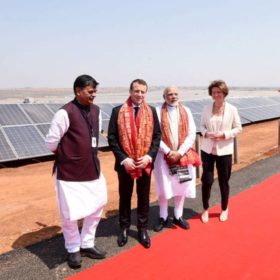
India well on track for 100 GW target, claims minister
The Minister for New and Renewable Energy has waved aside complaints about safeguarding duties by telling India’s upper house the nation’s ambitious four-year solar target is ‘comfortably’ within reach.
