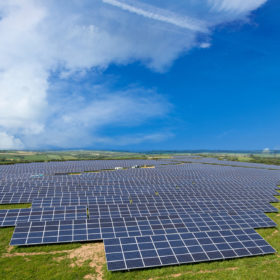
PV demand, changing auctions and price declines – GTM lays out its latest predictions
An uptick in global PV demand will occur in 2020, with China’s 30.5 policy directly affecting 2018’s results by around 18%, says GTM Research. Rapidly falling module prices will benefit predominantly Asian markets, where modules comprise the lion’s share of capex, although regions like Europe will see increased installations. Laying out 10 PV predictions, it anticipates, among others, intensified competition, lower bid prices, more technology neutral auctions and an increasing amount of subsidy free solar.
Australian states harden stance on unambitious national policy as energy bodies take opposing sides
As the debate heats up before Friday’s meeting between federal, state, territory and local government energy ministers in Australia, the Victoria authority has issued a last-minute call to redraft the proposed National Energy Guarantee, and the Australian Capital Territory has redefined its NEG approval condition with regard to the emissions target. Meanwhile, Australia’s energy bodies have taken separate paths.

Argentina suspends RE auctions
The planned fourth round of the RenovAr program will probably not be held this year or next. The Argentinian government says grid constraints and difficult financing conditions may increase the auction’s prices.

UPDATE: ACWA offered lowest bid in Egypt’s 200 MW tender
As pv magazine has learnt, the Saudi energy giant lowered its offer to $0.02752/kWh at the last minute, beating the bid lodged by Spain’s Fotowatio, which offered $0.02791 per kWh.
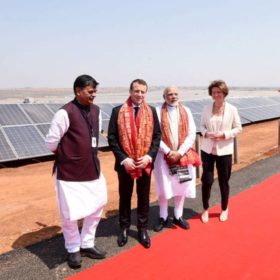
India well on track for 100 GW target, claims minister
The Minister for New and Renewable Energy has waved aside complaints about safeguarding duties by telling India’s upper house the nation’s ambitious four-year solar target is ‘comfortably’ within reach.
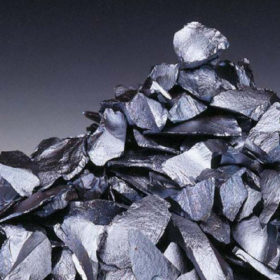
Daqo New Energy maintains production amid falling prices
Chinese polysilicon producer Daqo New Energy says it maintained full production capacity in June, and reiterated its full year production guidance of 22,000-23,000 MT. The company’s Q2 financials show, however, sales volume and profits fell over the previous quarter, thanks to loss of demand in China.
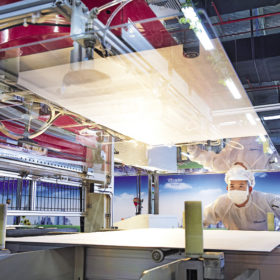
Trump confirms additional 25% tariffs on Chinese cells and modules
While the duties make importing solar from China even more impractical, they are unlikely to have a significant impact on trade flows or on the U.S. market, with Chinese manufacturers outsourcing operations overseas.

Solar projects under net metering keep growing in Ukraine
Cumulative PV capacity installed under the scheme reached 90 MW at the end of June. Of this capacity, around 27 MW were deployed in the second quarter alone.
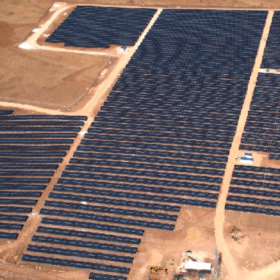
Turkey: 30 MW of licensed capacity under construction
Turkey has tendered 600 MW of PV capacity, very little of which has been installed to date. A new 30 MW solar PV project, however, is currently under construction.

France allocates 720 MW in large-scale solar tender, final average price reaches €58.2/MWh
In the fourth of six tenders totaling 4 GW planned for the utility-scale segment, the French government selected 103 solar projects. In the next two, and final, rounds, around 1.7 GW of additional solar capacity will be assigned.
