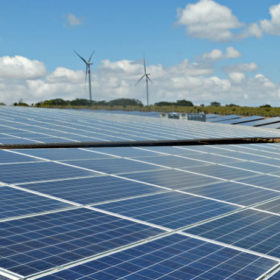
Brazilian government cancels PPAs for 249.7 MW of solar
The contracts were scrapped through an auction launched in April to cancel projects selected in reserve energy auctions held between 2014 and 2015.
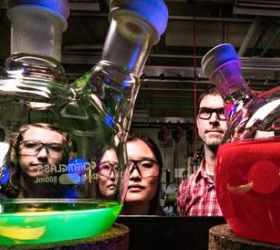
Perovskite has changed its status to single (cell)
In another breakthrough for the material so many solar advocates hope will replace traditional silicon in module production, a group of scientists in China and the United States have produced the first monocrystalline perovskite cell, which could accelerate its acceptance as a silicon replacement.
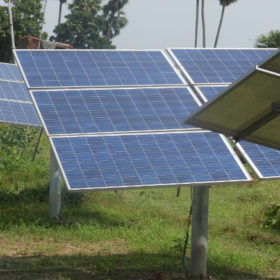
Quality is an issue in the fast-growing Indian market
Opinion: One of the main challenges for investors in India is to meet competitive pricing while achieving acceptable quality. Prakash Vora, senior director – Operations at Terraform Global India, explains how to ensure quality in India.
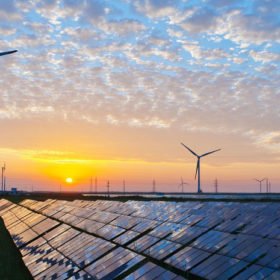
Renewables generate (almost) as much U.S. power as nuclear during H1 2017
The DOE’s latest numbers show renewables rising to 20.05% of U.S. electricity generation during the first half of the year, just behind nuclear’s 20.07%. Solar provided 2% of electricity, and wind 7%.

pv magazine 7th Quality Roundtable: why investors should spend a little to save a lot
At the 7th pv magazine Quality Roundtable, to be held on September 21 at the REI show in Greater Noida, India, a collection of experts will examine the chief quality concerns facing this growing market. Confirmed speaker Steven Xuereb of PI Berlin explains how investors should take a long-term view when entering the Indian market, looking beyond immediate gains.
Hanergy claims narrower profit of $31.3 million in H1
Hanergy Thin Film Power (HTF) has reported an unaudited net profit of HK$244.8 million ($31.3 million) in the six months to the end of June, down roughly 70.2% from the preceding year, as revenue edged down 13.4% on the year to HK$2.9 billion.

Chinese module prices rise 10% above forecast, causing problems for India
Growth in the booming Indian solar market, heavily reliant on Chinese modules, could slow as strong Q3 demand for panels in China and the U.S. push up prices and impact Indian firms’ financial modelling.
Australia urged to aim for 100% renewables by 2030s
One of the world’s leading climate experts says Australia needs to aim for 100 per cent renewables within two decades as part of its efforts to meet climate targets, and it stands to reap enormous economic – and environmental – benefits if it does.
GTM Research: Global solar capacity to rival nuclear by end of 2017
Information from the latest edition of GTM Research’s Global Solar Demand Monitor shows that solar’s globally installed capacity is rapidly catching up with that of nuclear, and that solar could in fact grow to more than double nuclear’s current capacity within the next five years.
IHS Markit raises 2017 global installations forecast
Industry analyst IHS Markit has raised its forecast for global installations in 2017 to 90 GW, representing 14% growth on the previous year’s figures. Continuing demand in China after the June 30th FIT cut is cited as the main driver for the increased expectation.
