
Togolese airpost launches tender for 1.8 MW solar park
The self-consumption project has an estimated cost of around $2.4 million.

French-Ecuadorian consortium wins 14.8 MW/40.9 MWh solar-plus-storage tender in Galapagos Islands
The solar-plus-storage facility will be built by Ecuadorian developer Gransolar and French renewable energy company Total Eren on Santa Cruz Island in the Galapagos National Park.

Debate over US solar safeguards starting to heat up
The governments of Mexico, Malaysia, and Turkey – along with the Solar Energy Industries Association, NextEra Energy Resources, REC Americas, and other companies – are chiming in to have a say in a recently reignited debate in the U.S. solar market.

Chinese PV Industry Brief: Trina shipped 10.5 GW of modules in H1
Moreover, the Chint group said its PV plant fleet in China has reached a combined capacity of 6.54 GW and project developer China Shuifa Singyes said high polysilicon prices and Covid restrictions had caused a revenue drop.
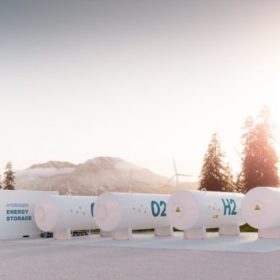
The Hydrogen Stream: 2 GW green hydrogen project in Chile, new push from South Korea
Furthermore, the Indian government is proposing to mandate using green hydrogen in fertilizer and refining and Japanese automotive manufacturer Toyota wants to assemble integrated dual fuel cell (FC) modules in the United States.

Cheapest long-duration storage for systems with high renewables
National Renewable Energy Laboratory researchers have studied which tech offers the lowest levelized cost of energy to provide the US Western Interconnection grid with electricity when wind and solar are not available. They assumed 85% renewables penetration and determined that geologic hydrogen storage and natural gas combined-cycle plants with carbon capture storage are the cheapest options for 120-hour discharge applications.

India met 72% of H1 electricity demand with solar, wind
New figures from India paint a better picture for it than other Asian nations, where fossil fuel-based generation accounted for a much bigger share in meeting rising electricity demand in the first six months of this year.

Iraq announces another 2 GW solar project
Under development by Chinese conglomerate Power China, the project will initially have a capacity of 750 MW.
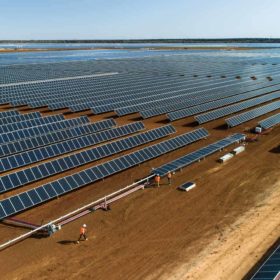
Australia’s largest planned renewables zone ‘swamped’ with 34 GW of capacity
Australia’s newest planned renewable energy zone has been “swamped” by investors, with the New South Wales government revealing that 34 GW of new solar, wind and energy storage projects have already been proposed.
ICRA offers stable outlook on India’s renewable energy sector
The forecast is supported by a strong project pipeline, competitive tariffs, and continued policy support. The demand outlook for domestic solar module manufacturers also remains favorable.
