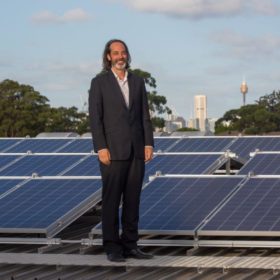
World-first relocatable solar pods power commercial rooftops
Today’s Solpod launch Down Under could be a potential game changer for commercial solar. Substantially funded by the Australian Renewable Energy Agency and supported by energy retailer ERM Power, the product will be trialed across 25 shopping centers and New South Wales government sites.
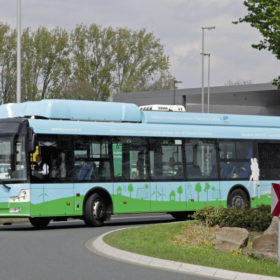
Swedish researchers develop ultra-fast hydrogen leak detector
The discovery could provide a great leap forward in the feasibility of using hydrogen-powered cars to curb global transport emissions.

Polish PV potential yet to be realized
Only 36% of the 360 MW of capacity allocated in Poland’s first two solar auctions is grid connected, according to research institute the IEO. With the completion deadline for the first exercise having expired last year, there is also little time left for developers selected in the second auction to finalize projects. In three auctions held by the Polish government, a combined capacity of 870 MW has been allocated.

Developer Avaada raises $145m to fund 2.4 GW of Asian and African solar
Indian developer Avaada Energy has raised the funds from the Asian Development Bank and European development institutions. The PV business will finance 2.4 GW of the 5 GW of solar capacity it hopes to secure over the next two years.
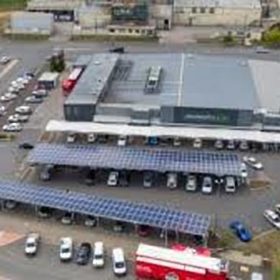
Woolworths becomes world’s first retailer to issue green bonds
The Australian supermarket giant is issuing green bonds to fund the development of low-carbon supermarkets and the installation of solar at its stores and distribution centers.
Venezuela plans its first utility scale PV projects
Although details are vague, the Vice Ministry of Alternative Energies is reportedly developing the country’s first medium sized projects to be connected to the national grid. It is also planning to implement distributed generation projects ranging in size from 1.5 MW to 3 MW in the crisis-torn nation.
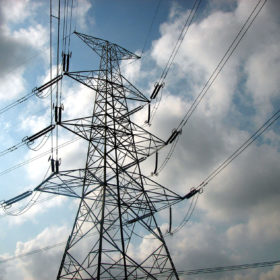
China offers insight into transition to subsidy-free solar
The emphasis on grid-parity PV has been highlighted in a consultation document that has emerged after several weeks of haggling in Beijing. Chinese analyst AECEA says the success of any subsidy-free effort would hinge on the ability of power companies to transmit and guarantee consumption of power generated by new projects.

Renewables & geopolitics: Russia
In the latest of our interviews about renewable energy and geopolitics, Indra Øverland – head of the Center for Energy Research – discusses the difficult relationship between Russia and renewable energy. Despite a belief the gas and oil superpower will have little interest in clean energy, Overland believes the world’s most extensive nation will use renewables to improve its domestic power supply, especially in remote regions. Russia has a highly continental climate, with lots of sunshine – more than most of Western Europe, Overland says. Whether it can take advantage of that potential, however, is unclear.
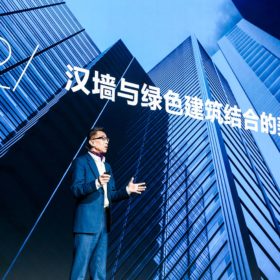
Hanergy plans to roll out industrial park development outside China
The Chinese thin film giant has transformed itself into a solar manufacturing equipment supplier and is set to expand a strategy which sees affiliates help fund industrial parks which then generate orders for its thin film production lines.
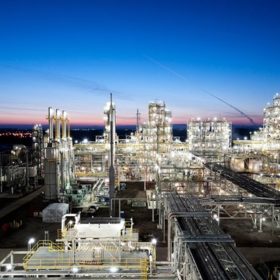
REC Silicon raises $20 million through private placement
The polysilicon maker said it will use the funds to improve its liquidity situation until access to the Chinese polysilicon market is restored. It sold 254,381,870 shares, which corresponds to approximately 9.9% of its oustanding capital.
