
PV agrivoltaics could revitalize Brazilian crops
Agriculture accounts for 21.5% of Brazil’s gross domestic product and 27% of its emissions. PV companies are now targeting an industry that represents 14% of the nation’s small-scale installations. With credit incentives and growing familiarity with the technology, agribusinesses and solar specialists are discovering new opportunities for collaboration.

The critical role of industry mentoring to shape leaders
In this week’s column, Women in Solar Europe (WiSEu) explains why mentoring can represent a powerful tool to combat modern-day issues like the gender pay gap, leadership inequality, and pervasive gender biases, both conscious and unconscious.
Researchers identify barriers to solar development in Poland
A research team from Poznań’s University of Economics & Business and SMA Solar Technology AG spoke to installers, designers, distributors and manufacturers in Poland’s solar industry to identify key barriers to PV development. They highlighted a lack of connection capacity and prices of non-renewable energy sources as the main issues.

Novel blockchain-based virtual utility for P2P PV trading
Researchers from Canada’s Western University have developed an open-source, blockchain-based virtual utility for peer-to-peer (P2P) solar trading, using smart contracts to save up to $1,600 (US dollars) for 10 homes in simulated scenarios.
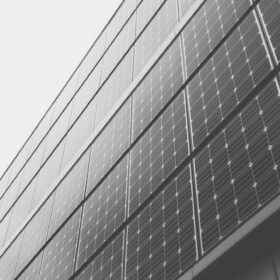
Building-integrated PV in the Netherlands
The latest report from the International Energy Agency Photovoltaic Power Systems Programme (IEA-PVPS) says that building-integrated photovoltaics (BIPV) could be key to help decarbonize cities in the Netherlands, but it warns that the needs of the solar and construction sector must be bridged.
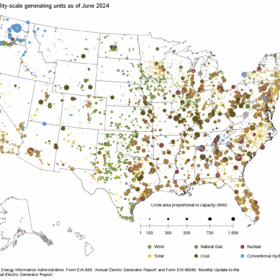
US deploys 12 GW of utility-scale solar in H1
The US Energy Information Administration (EIA( says 20.2 GW of electricity generation capacity was added in the United States during the first half of 2024. Solar energy led the way, with significant deployments in energy storage as well.
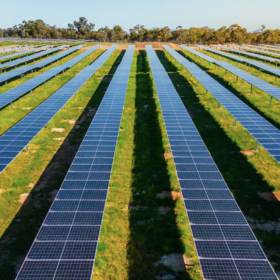
Australia needs 126 GW of solar, wind by 2030 to hit net zero by 2050, says BNEF
Australia can still reach its net-zero energy goal by 2050, according to BloombergNEF (BNEF), but there is no time to waste, with a need for significant investments in solar, wind, and energy storage to stay on track.
US module manufacturers seek ‘critical’ retroactive tariffs
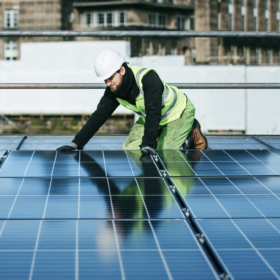
Led by First Solar and Qcells, US solar module manufacturers have filed allegations with the US Department of Commerce, citing “critical circumstances” and suggesting increased module imports due to their previous lawsuit filings.

Moldova kicks off first renewables auction
Moldova aims to procure 60 MW of solar in its first renewables auction. Successful investors will secure fixed price guarantees for power generated over periods of 15 years. The deadline for applications is March 31, 2025.

Rodrigues and Curacao have PV lessons for us all
With the world’s islands already experiencing some of the worst effects of climate change, much could be learned from their ability to demonstrate the viability of 100% clean energy systems. Greening the Islands’ Gianni Chiannetta examines the case for two islands in the Caribbean Sea and Indian Ocean.
