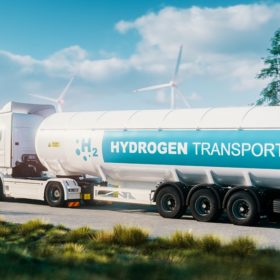
The Hydrogen Stream: Oil producers showing rising interest in hydrogen
A team led by CoorsTek Membrane Sciences has demonstrated a system to convert methane via proton ceramic reactors, while Nel Hydrogen Electrolyser has received an order from an undisclosed Indian refinery for an alkaline electrolyzer, in a deal that underscores how oil and gas companies are becoming increasingly interested in the hydrogen sector.
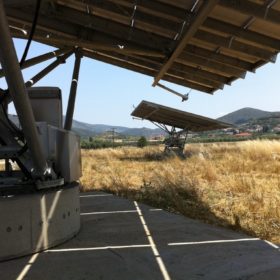
Greece rolls out new policy, tenders as UAE eyes investment opportunities
Greece and the United Arab Emirates signed new cooperation agreements this week, including deals focused on renewable energy. The Greek government also introduced a new draft law for energy storage and floating solar, as well as new licensing regime, while noting plans for new renewable power auctions.

Latest EU electrolyzer pledge could speed up solar permitting
With an estimated 500 TWh of renewable electricity needed to produce the 10 million tons per year of clean hydrogen wanted by the European Union by 2030, the recent promise to ramp up European electrolyzer production capacity could give a boost to solar developers grappling with sluggish permitting regimes.
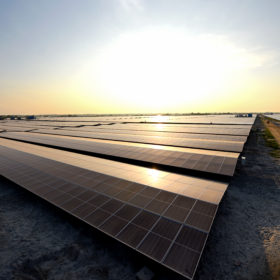
Bangladesh secures $200m from Asian Infrastructure Investment Bank to support renewables
The China-led Asian Infrastructure Investment Bank (AIIB) has extended a $200 million long-term credit facility to Bangladesh to finance a range of infrastructure projects, including renewable energy expansion.
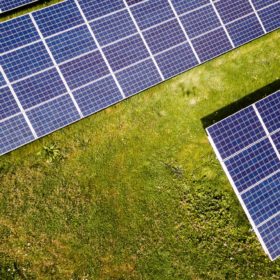
Chinese state-owned body enters Wiki-Solar’s ‘gigawatt club’
The 1.36 GW of solar capacity installed by Shanghai Electric across just three projects in 2021 and the first quarter of 2022 helped it enter an annual ranking of the global solar industry’s biggest engineering, procurement, and construction contractors.

Competitive, renewable hydrogen from the Middle East and North Africa
ATA Insights held a webinar on April 25 that focused on green hydrogen opportunities in the Middle East and North Africa.
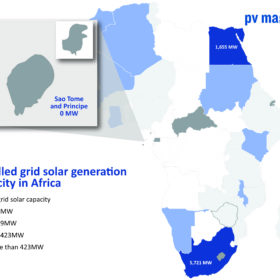
Island nation issues tender for first grid-connected solar
The government of Sao Tome and Principe is inviting bids to build a 1.5 MW solar plant which it appears is destined to replace a thermoelectric facility.
Grid company appeals for flexibility from energy consumers
Tennet has suffered well-cataloged problems attempting to absorb solar projects into parts of its Dutch grid network and is now appealing for help in two pinch provinces.

Seoul launches BIPV incentive scheme
The Seoul Metropolitan Government has revealed that it will subsidize building-integrated photovoltaic projects through a new rebate scheme.

Cyprus launches PV, battery funding scheme as Greece turns to gas
Cyprus has launched a new scheme to fund installations of PV arrays and battery systems, with a specific focus on owners of electric vehicles. Greece, meanwhile, has devised a subsidy scheme to support the use of gas for conventional cars.
